Table of Contents
- The Core Dilemma: Security vs. Privacy
- Ethical Implications of AI and Facial Recognition
- Regulatory Frameworks and Accountability
- Dangers: Discrimination and Data Misuse
- Practical Solutions for Personal Privacy
- Frequently Asked Questions
The Core Dilemma: Security vs. Privacy in Surveillance Technologies
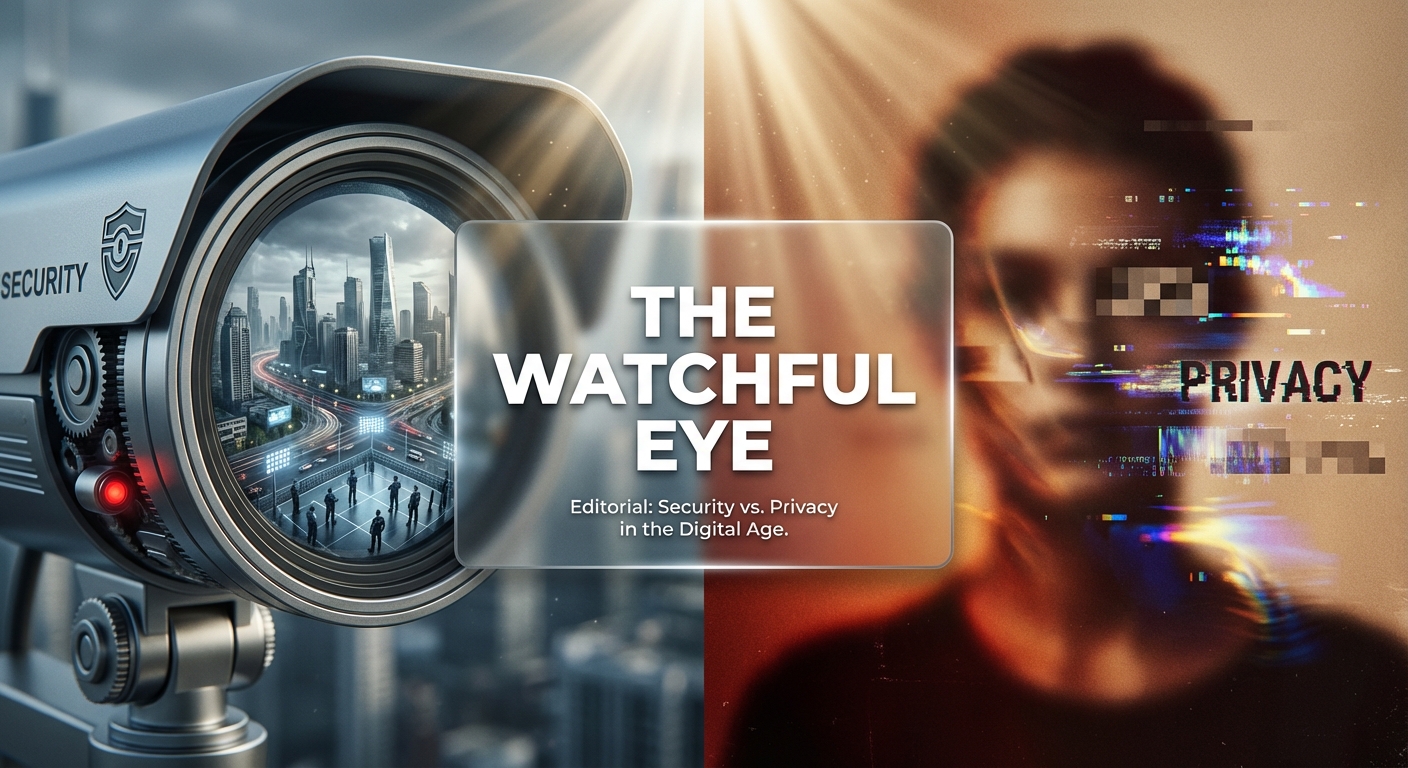
The fundamental argument driving the surveillance debate is the trade-off between collective security and individual anonymity. Proponents argue that modern surveillance technologies—such as CCTV networks, license plate readers, and drone monitoring—are essential tools for crime deterrence and rapid emergency response. The logic is linear: more data leads to faster resolutions. However, privacy advocates contend that this creates a “Panopticon effect,” where the mere presence of observation chills free speech and behavioral freedom.
A critical misconception is that surveillance is passive. It is not. As highlighted in a recent study by Harvard Law Review, surveillance attacks “intellectual privacy,” creating an environment where individuals are afraid to explore controversial ideas for fear of future retribution. The ethical friction arises when the scope of monitoring exceeds the necessity of the threat. For instance, using thermal imaging to catch a fugitive is widely accepted; using it to monitor peaceful protests crosses an ethical line into coercion.
Furthermore, the integration of these systems into daily life often happens without public debate. This “function creep”—where technology designed for terror prevention is slowly repurposed for petty crime or employee monitoring—erodes trust. To understand the broader trajectory of these security trends, you can read our analysis on industry intelligence and future security forecasting.
Ethical Implications of AI and Facial Recognition
The introduction of Artificial Intelligence (AI) into surveillance infrastructure has shifted the debate from “who is watching” to “how is the machine interpreting.” Traditional cameras record reality; AI interprets it. This interpretation is fraught with ethical implications, primarily regarding bias. Machine learning algorithms are trained on historical data sets, which often contain embedded societal prejudices.
When facial recognition software is deployed in law enforcement, these biases can lead to false positives, disproportionately affecting minority populations. A report by Nature warns that computer-vision research often proceeds without sufficient ethical scrutiny, leading to systems that are highly accurate for white males but error-prone for women and people of color. This is not just a technical glitch; it is a human rights issue. If an algorithm falsely identifies an innocent person as a suspect, the burden of proof shifts unfairly onto the citizen.
Moreover, the concept of accountability becomes murky with AI. If an autonomous surveillance drone makes an incorrect assessment that leads to harm, who is responsible? The operator? The software developer? The agency that procured it? This “accountability gap” is one of the most pressing challenges in the ethics of AI surveillance.
The Role of Regulatory Frameworks and Accountability
To mitigate these risks, robust regulatory frameworks are essential. Currently, technology often outpaces legislation. While the EU has moved forward with the GDPR and the AI Act, many nations still operate in a “wild west” environment regarding digital data collection. Ethical surveillance requires transparency—citizens must know when they are being watched, by whom, and for what purpose.
Effective regulation must focus on three pillars:
- Purpose Limitation: Data collected for traffic control cannot be used for immigration enforcement without a warrant.
- Data Retention: Surveillance footage should be deleted after a set period unless relevant to an active investigation.
- Independent Oversight: Audits by non-governmental bodies are necessary to ensure compliance and prevent abuse.
Without these guardrails, the potential for surveillance misuse increases. For a broader look at how global regulations are shifting in response to these tech advancements, check out our weekly roundup on global regulatory news.
Dangers of Surveillance: Discrimination and Data Misuse
The dangers of unchecked surveillance extend beyond privacy invasion to active discrimination. In authoritarian contexts, surveillance is a tool for social control, used to suppress dissent and monitor marginalized groups. However, even in democracies, data misuse is a significant risk. “Doxing,” blackmail, and corporate espionage are all facilitated by the vast troves of personal data collected by smart city sensors and private security devices.
A specific area of concern is the commercialization of surveillance data—often termed “surveillance capitalism.” Behavioral data collected by security apps or smart home devices can be sold to insurers or advertisers, leading to price discrimination or denial of services. This commodification of human behavior treats citizens as data points to be mined rather than individuals with rights.
Practical Solutions for Personal Privacy
While systemic change requires policy reform, individuals can take immediate steps to protect their privacy. This does not mean going off-grid, but rather employing “counter-surveillance” hygiene. This includes using encrypted communication apps, being mindful of permissions granted to mobile apps, and physically securing personal spaces against hidden monitoring devices, which are becoming increasingly common in hotels and rentals.
For travelers or privacy-conscious individuals, detecting unwanted surveillance hardware is a proactive step. We recommend high-sensitivity RF detectors that can sweep a room for hidden cameras and listening devices.

Frequently Asked Questions
What are the main ethical concerns with facial recognition?
The primary concerns are bias and consent. Facial recognition systems frequently demonstrate higher error rates for people of color and women, leading to wrongful identification. Additionally, capturing biometric data without explicit permission violates the fundamental right to anonymity in public spaces.
How does surveillance technology impact mental health?
Constant monitoring can create a psychological state of hyper-vigilance and anxiety, known as the “chilling effect.” People tend to self-censor and alter their behavior when they believe they are being watched, which can stunt creativity and increase stress levels.
Can AI surveillance be used ethically?
Yes, but it requires strict governance. Ethical use implies transparency (people know they are being monitored), necessity (surveillance is proportional to the threat), and human-in-the-loop oversight (AI flags issues, but humans make the final judgment).
What is the difference between public and private surveillance?
Public surveillance is conducted by government entities (like police CCTV) and is theoretically subject to constitutional limits and public accountability. Private surveillance involves corporations or individuals (like Ring doorbells or mall cameras) and is largely governed by user agreements and property laws, often with less oversight.
How do different countries regulate surveillance?
Regulations vary widely. The European Union has the GDPR, which offers strong data protection and limits automated decision-making. In contrast, countries like China employ extensive state surveillance systems (e.g., Social Credit System) with minimal privacy protections. The U.S. has a patchwork of state and federal laws, often lacking a comprehensive federal privacy standard.