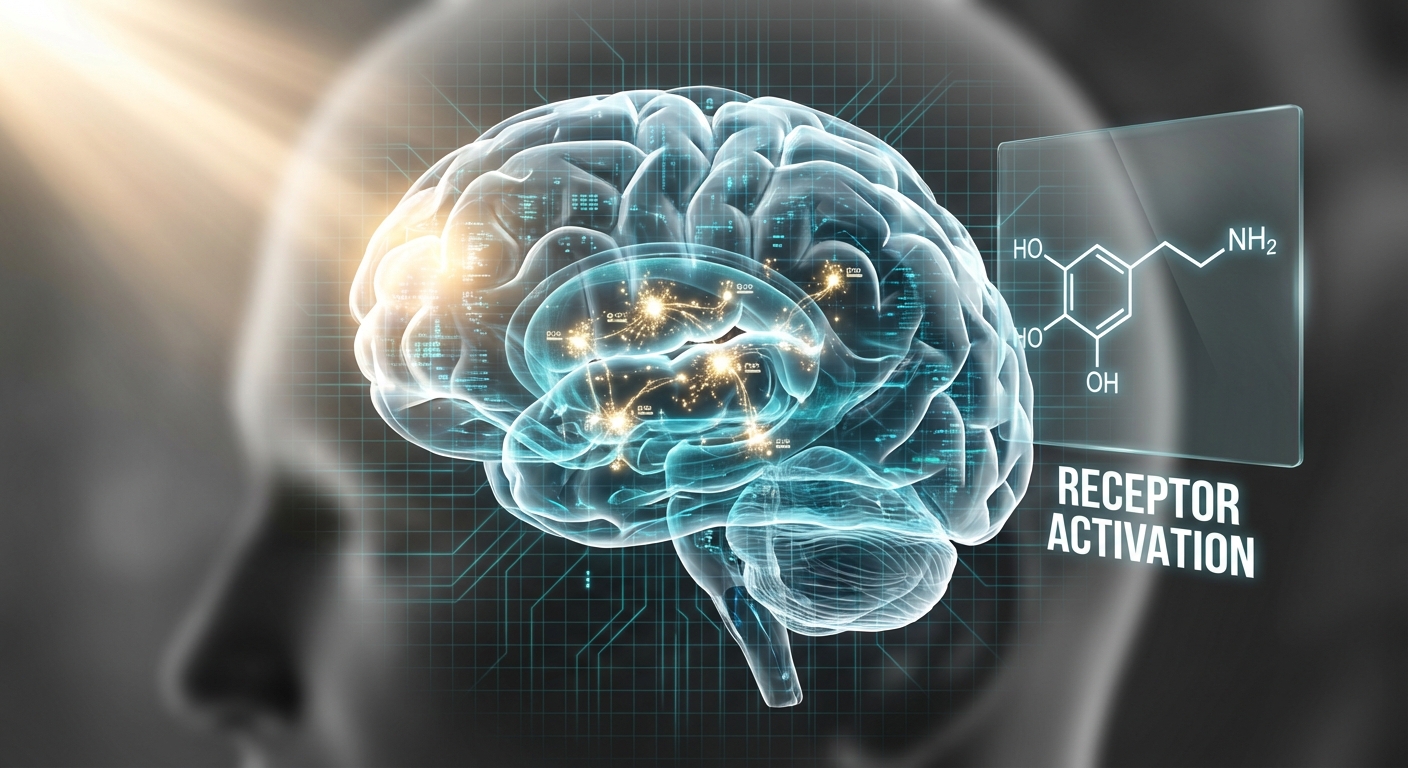
- Direct Answer: What Role Do Dopamine Receptors Play in Depression?
- 1. The Serotonin vs. Dopamine Hypothesis: Why SSRIs Miss the Mark
- 2. D1 to D5: Decoding the Receptor Subtypes
- 3. Pramipexole and Agonists: The ‘Off-Label’ Solution for Anhedonia
- 4. Behavioral ‘Agonists’: How to Upregulate Receptors Naturally
- 5. The Warning: DAWS and Impulse Control Disorders
- Frequently Asked Questions
1. The Serotonin vs. Dopamine Hypothesis: Why SSRIs Miss the Mark
For decades, the “chemical imbalance” theory of depression has been dominated by serotonin. The logic was simple: low serotonin equals low mood. However, millions of patients report that while SSRIs (Selective Serotonin Reuptake Inhibitors) might reduce their crying spells or anxiety, they remain stuck in a state of emotional flatlining. They aren’t sad, but they aren’t happy. This is where dopamine enters the conversation.
Dopamine is not just the “pleasure molecule”; it is the molecule of motivation. According to research from Simply Neuroscience, dopamine deficiency in the striatum is directly linked to anhedonia—a core symptom of Major Depressive Disorder (MDD) where patients lose interest in hobbies, food, and social interaction.
The Mechanism of Action:
SSRIs increase serotonin in the synapse, which generally promotes satiety and contentment. In contrast, dopaminergic agents increase drive. If your depression manifests as “I want to do things but physically can’t start,” you likely have a dopamine, not serotonin, issue. This distinction is critical because treating a dopamine-deficient brain with serotonin-boosting drugs can sometimes worsen apathy, a phenomenon known as “SSRI-induced indifference.”
2. D1 to D5: Decoding the Receptor Subtypes
To understand treatment options, we must look beyond “dopamine levels” and focus on receptor sensitivity. The brain has five primary dopamine receptor subtypes, divided into two families. Understanding these helps explain why certain drugs (and behaviors) work.
- D1-Like Family (D1, D5): These are excitatory receptors. When dopamine binds here, it stimulates the neuron. They are heavily concentrated in the prefrontal cortex and are essential for working memory and focus. Dysregulation here often looks like the “brain fog” associated with depression.
- D2-Like Family (D2, D3, D4): These are inhibitory receptors (autoreceptors). They regulate the release of dopamine. Importantly, the D3 receptor is heavily involved in the emotional aspect of the reward system.
A significant breakthrough, as reported by Mount Sinai researchers, identified dopamine receptors in the hippocampus—the brain’s memory center. This suggests that low dopamine signaling doesn’t just kill your mood; it impairs your ability to remember positive experiences, trapping you in a loop of negative bias. This biological reality explains why “positive thinking” is chemically impossible for some patients without intervention.
3. Pramipexole and Agonists: The ‘Off-Label’ Solution for Anhedonia
When standard treatments fail (Treatment-Resistant Depression or TRD), psychiatrists may look to dopamine receptor agonists. These are drugs that mimic dopamine, binding directly to the receptors to trick the brain into firing.
The Primary Candidate: Pramipexole
Originally designed for Parkinson’s Disease, Pramipexole has shown remarkable efficacy in treating unipolar and bipolar depression. A review in PubMed highlights its affinity for the D3 receptor. By stimulating these receptors, Pramipexole can jumpstart the “seeking” system in the brain.
Why isn’t it the first choice?
Unlike SSRIs, dopamine agonists carry a risk of impulse control disorders. Because they artificially inflate the reward signal, patients may suddenly develop addictions to gambling, shopping, or hypersexuality. Furthermore, the brain creates tolerance quickly. If you flood the brain with artificial dopamine agonists, the receptors may downregulate (burn out) to protect themselves, eventually leading to a worse baseline state if the medication is stopped abruptly.

4. Behavioral ‘Agonists’: How to Upregulate Receptors Naturally
If medication is too risky, or if you are looking to augment your current treatment, you can influence dopamine receptor density through behavior. This is often referred to as “behavioral activation therapy.”
The “Cold” Shock
Deliberate Cold Exposure (ice baths or cold showers) has been shown to increase synaptic dopamine concentrations by up to 250%, with the elevation lasting for hours. Unlike drugs, which cause a sharp spike and crash, cold exposure creates a sustained release that does not typically lead to receptor downregulation.
The Fasting Protocol
Intermittent fasting can also reset the dopaminergic system. When food is scarce, the brain upregulates dopamine receptors to make you more motivated to find food. By removing the constant “dopamine drips” of snacking and sugar, you re-sensitize your receptors. This concept is closely tied to the impact of digital stimuli on our brain’s reward loops; for a deeper look at how modern technology hijacks these systems, read our analysis on the psychological impact of social media.
The Trap of “Cheap” Dopamine
A common mistake is trying to “treat” depression with high-dopamine activities like video games or junk food. These provide a temporary relief but ultimately cause receptor desensitization. The goal of behavioral therapy is to engage in high-effort, high-reward activities (like exercise), which rebuild the dopamine pathways, rather than eroding them.
5. The Warning: DAWS and Impulse Control Disorders
No discussion on dopamine receptor psychology is complete without a safety warning regarding Dopamine Agonist Withdrawal Syndrome (DAWS). This occurs when patients stop taking agonists like pramipexole. Symptoms resemble the crash from stimulants: extreme anxiety, panic attacks, agitation, and profound depression.
This highlights a critical biological fact: Homeostasis is King. The brain will always try to balance itself. If you push the dopamine system too hard (whether through drugs or addiction), it will push back. This is why titration (slowly increasing or decreasing dosage) is non-negotiable in clinical settings.
According to the PMC review on Dopamine Receptors, the future of treatment lies not just in flooding the brain with dopamine, but in modulating the heterodimers (receptor pairings) to fine-tune the signal without causing the chaotic side effects of broad-spectrum agonists.
Frequently Asked Questions
What are the symptoms of low dopamine in depression?
The hallmark symptom is anhedonia—the inability to feel pleasure. Other signs include lack of motivation (“psychomotor retardation”), difficulty concentrating, low libido, and sleeping too much (hypersomnia), distinguishing it from the insomnia often seen in anxiety-driven depression.
Can supplements like Tyrosine fix dopamine receptors?
L-Tyrosine is a precursor to dopamine, meaning it provides the raw building blocks. While it can temporarily boost levels during acute stress, it does not fix receptor sensitivity. If your receptors are downregulated (burnt out), adding more fuel (Tyrosine) won’t start the car.
Is Pramipexole an antidepressant?
It is not FDA-approved as an antidepressant, but it is widely used “off-label” for Treatment-Resistant Depression. Clinical studies suggest it is particularly effective for the “apathy” subtype of depression where SSRIs have failed.
How long does it take for dopamine receptors to heal?
Neuroplasticity is a slow process. Studies on addiction suggest it can take 6 to 14 months of abstinence from hyper-stimulating activities (or cessation of drugs) for D2 receptors to return to normal density levels.
Does exercise increase dopamine receptors?
Yes. Consistent aerobic exercise has been proven to increase the density of D2 receptors in the striatum. This explains why exercise is often as effective as medication for mild to moderate depression—it physically upgrades the brain’s hardware for receiving pleasure.