- Direct Answer: How is the Chip Shortage Impacting Manufacturing?
- 1. The “Legacy Node” Bottleneck: Why Old Tech is the Problem
- 2. The AI Cannibalization Effect: HBM vs. Consumer Hardware
- 3. Automotive vs. Consumer Electronics: The Prioritization War
- 4. The Death of “Just-in-Time”: Strategic Inventory Shifts
- 5. Recommended Solutions: Strategic Knowledge & Asset Protection
- Frequently Asked Questions
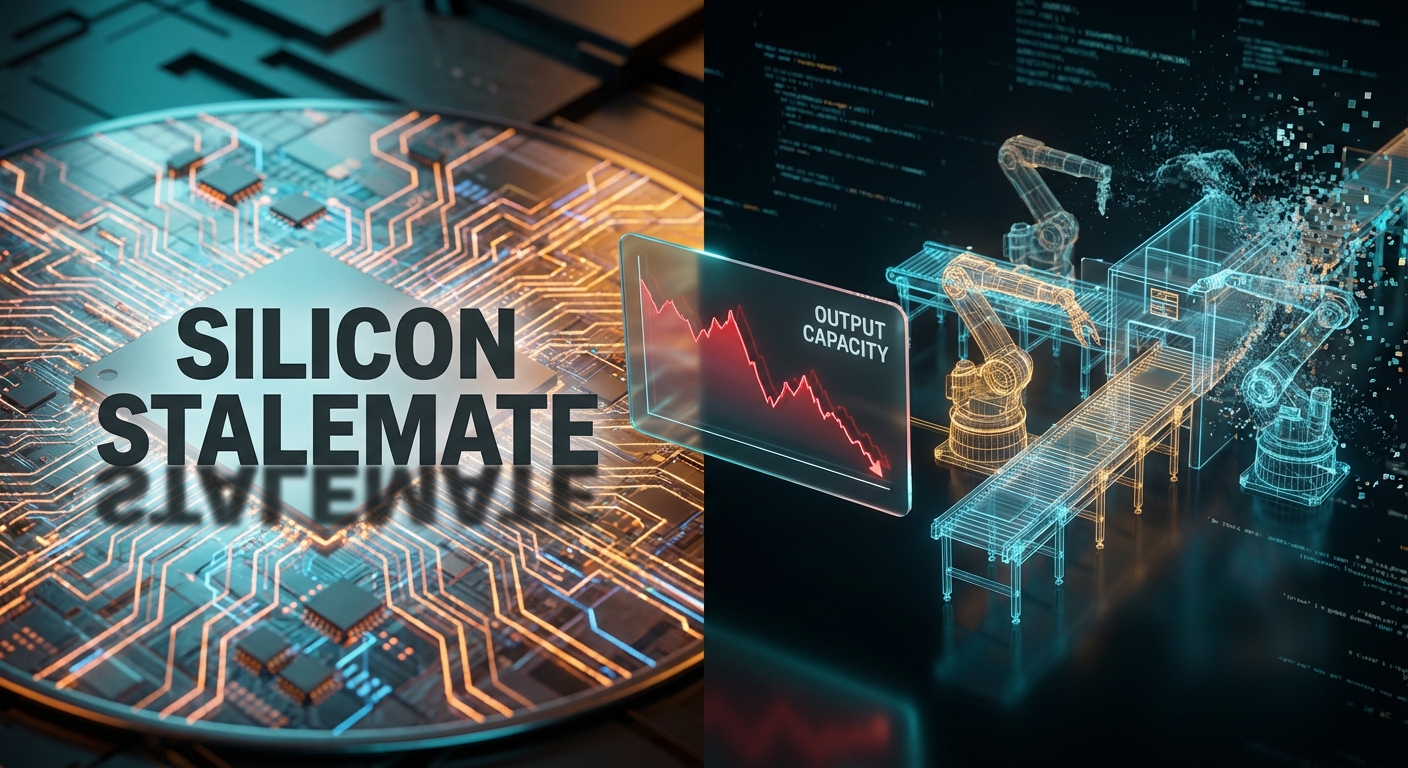
The semiconductor chip shortage impact on hardware manufacturing has fundamentally altered the global supply chain, forcing a transition from efficiency to resilience. The primary impacts include a 20-40% surge in component costs, lead times stretching to 50+ weeks for microcontroller units (MCUs), and the stalling of production lines in automotive and industrial sectors. This crisis is driven by under-investment in legacy 200mm fabrication nodes and the diversion of manufacturing capacity toward high-margin AI processors.
1. The “Legacy Node” Bottleneck: Why Old Tech is the Problem
A common misconception is that the shortage is entirely about the cutting-edge 3nm or 5nm chips used in the latest iPhones or NVIDIA GPUs. In reality, the hardware manufacturing sector is being strangled by a shortage of “legacy chips”—specifically those built on 200mm wafers using older nodes (28nm to 90nm).
The Mechanism of Shortage:
Modern hardware—from smart toasters to industrial robotic arms—relies on dozens of simple power management ICs (PMICs) and display drivers. These chips are low-margin products. Consequently, major foundries like TSMC and Samsung have little financial incentive to build new factories for this older technology. They are pouring billions into advanced fabs, leaving the capacity for legacy chips stagnant while demand for “smart” devices explodes.
According to McKinsey & Company, this mismatch has created a structural deficit. Hardware manufacturers often find themselves with 99% of a product built, unable to ship it because a $0.50 power regulator is missing. This specific bottleneck is halting the rollout of advanced robotics applications in manufacturing, as the sensors required for automation are heavily reliant on these legacy nodes.
2. The AI Cannibalization Effect: HBM vs. Consumer Hardware
The explosion of Generative AI has exacerbated the shortage through a phenomenon known as Capacity Displacement. Semiconductor manufacturing is a zero-sum game; there is a finite amount of cleanroom space and raw silicon wafers available.
The HBM Impact:
Data centers powering AI models require massive amounts of High Bandwidth Memory (HBM). Producing HBM is complex and consumes significantly more wafer area than standard DRAM used in laptops and PCs. As manufacturers prioritize these high-profit AI components, production lines for standard consumer memory are being converted or deprioritized.
This shift is creating a looming crisis for hardware makers. As detailed in our hardware price forecast for 2026, we expect a sharp rise in the cost of SSDs and RAM as this “cannibalization” takes full effect. For hardware manufacturers, this means the bill of materials (BOM) for standard devices will rise unpredictably, eroding profit margins.
3. Automotive vs. Consumer Electronics: The Prioritization War
The shortage has ignited a bidding war between sectors. During the pandemic, automakers canceled chip orders, anticipating a recession. Consumer electronics companies snapped up that capacity. When demand for cars returned, the capacity was gone.
The Resulting Instability:
Automakers are now signing direct, long-term agreements with foundries, bypassing traditional Tier-1 suppliers. This aggressive stockpiling creates “phantom demand”—orders placed just to secure queue spots—which distorts market signals. For smaller hardware manufacturers, this means competing against giants like Ford and Sony for the same limited supply of microcontrollers.
Data from IDC suggests that this volatility will continue until at least 2026, forcing companies to redesign products specifically to avoid scarce components—a costly and time-consuming engineering challenge.
4. The Death of “Just-in-Time”: Strategic Inventory Shifts
For decades, hardware manufacturing worshipped the altar of “Just-in-Time” (JIT) manufacturing—keeping inventory as close to zero as possible to reduce warehousing costs. The chip shortage has effectively killed this model.
The Pivot to “Just-in-Case”:
Manufacturers are now pivoting to a “Just-in-Case” (JIC) strategy. This involves:
- Buffer Stockpiling: Holding 6-12 months of critical silicon inventory, tying up massive amounts of working capital.
- Component Redesign: Engineering PC boards (PCBs) that can accept multiple variants of a chip from different suppliers to ensure continuity.
- Regional Diversification: Moving away from single-source suppliers in East Asia to mitigate geopolitical risks.
This shift aligns with broader sustainable green technology initiatives, as companies seek to shorten supply chains not just for security, but to reduce the carbon footprint of logistics.
5. Recommended Solutions: Strategic Knowledge & Asset Protection
For business leaders and hardware enthusiasts navigating this volatility, the best defense is education and asset preservation. Understanding the geopolitical forces at play is essential for forecasting, while maintaining existing hardware becomes critical when replacements are unavailable.
1. The Strategic Playbook: “Chip War” by Chris Miller
To navigate the shortage, you must understand the geopolitical chessboard. This book provides the definitive context on why fabs are located where they are and the risks of future conflicts (e.g., Taiwan) that could freeze hardware manufacturing entirely.

2. The Tactical Solution: iFixit Pro Tech Toolkit
With lead times for new hardware stretching to months, the ability to repair and maintain existing infrastructure is a competitive advantage. This toolkit is the industry standard for component-level repair, allowing IT teams to swap specialized chips, batteries, and screens to extend equipment lifecycles.

Frequently Asked Questions
When will the chip shortage end?
While supply for some consumer sectors (like PCs) has stabilized, shortages in automotive and industrial sectors—specifically for legacy nodes—are predicted to persist into 2026 due to structural under-investment in older manufacturing technologies.
Why can’t we just build more chip factories?
Building a semiconductor fabrication plant (fab) takes 3-5 years and costs between $10 billion and $20 billion. Furthermore, the specialized equipment required to outfit these factories (lithography machines) is also in short supply, creating a “shortage within a shortage.”
How does the chip shortage affect product prices?
The shortage increases the cost of raw components, logistics, and warehousing (due to stockpiling). Manufacturers pass these costs to consumers. Additionally, many companies have stopped producing low-end, budget-friendly models to focus their limited chip supply on high-margin, premium products.
What is a ‘legacy node’ and why is it important?
A legacy node refers to older chip manufacturing processes (typically 28nm or larger). While not powerful enough for AI or smartphones, these chips are essential for power management, sensors, and display drivers. Without them, even the most advanced device cannot function.
Are automakers still affected by the shortage?
Yes. Modern vehicles are essentially data centers on wheels, requiring up to 3,000 chips. Because automakers rely heavily on the older, scarcer legacy chips, they remain one of the most vulnerable sectors to supply chain disruptions.