- Direct Answer: The Top Frameworks for Finance
- 1. The Gold Standard: NIST Cybersecurity Framework 2.0
- 2. The Governance Model: ISO/IEC 27001
- 3. Vendor Trust: SOC 2 Type II
- 4. Mapping Frameworks to FFIEC & GLBA Regulations
- 5. The New Perimeter: Implementing Zero Trust
- 6. The Mechanism of Defense: Phishing-Resistant MFA
- Frequently Asked Questions
The best cybersecurity frameworks for financial institutions in 2025 are the NIST Cybersecurity Framework (CSF) 2.0, ISO/IEC 27001, and SOC 2 Type II. NIST CSF is the primary operational guide for managing risk (Identify, Protect, Detect, Respond, Recover). ISO/IEC 27001 provides a rigid certification for information security management systems (ISMS). SOC 2 is essential for demonstrating third-party data privacy compliance to clients and regulators.
For financial institutions, cybersecurity is no longer just an IT issue; it is a solvency issue. With the rise of AI-driven cyber threats, the traditional castle-and-moat defense strategies have collapsed. Banks, credit unions, and fintech firms must adopt a “defense-in-depth” strategy that is not only robust but also compliant with increasingly aggressive regulators like the FDIC and SEC.
Choosing the right framework is the first step in building this defense. However, simply downloading a PDF from the NIST website is not enough. You must understand the mechanism of these frameworks—how they interlock to create a mesh of controls that satisfies the FFIEC (Federal Financial Institutions Examination Council). This guide breaks down the technical and regulatory requirements to help you build a compliant, resilient security posture.
1. The Gold Standard: NIST Cybersecurity Framework 2.0
The NIST Cybersecurity Framework (CSF) is widely regarded as the bible of risk management in the US financial sector. Unlike other frameworks that act as a checklist, NIST CSF is a voluntary guidance based on existing standards, guidelines, and practices.
The Mechanism: The Six Functions
NIST recently updated to version 2.0, adding a critical sixth function: Govern. The framework now operates on a continuous loop:
- Govern: Establish the organizational culture and policy strategy.
- Identify: Asset management and risk assessment (know what you have).
- Protect: Implement safeguards (Access Control, Training).
- Detect: Continuous monitoring for anomalies.
- Respond: The specific playbook for when a breach occurs.
- Recover: Restoration of capabilities and resilience planning.
For financial institutions, the “Govern” function is the most significant update. It explicitly ties cybersecurity supply chain risk management (C-SCRM) to senior leadership. This means your Board of Directors is now directly responsible for the security of your third-party vendors.
Recommended Resource:
To implement NIST effectively, you need more than the white paper; you need a field manual.

2. The Governance Model: ISO/IEC 27001
While NIST is about guidance, ISO/IEC 27001 is about certification. It is an international standard that outlines the requirements for an Information Security Management System (ISMS).
Why It Matters for Finance:
Many international banking partners will not do business with you unless you can prove you are ISO 27001 certified. The mechanism here is the PDCA Cycle (Plan, Do, Check, Act). Unlike NIST, which allows for flexibility, ISO 27001 requires rigorous documentation and external audits. If NIST is the map, ISO 27001 is the vehicle inspection that proves your car is safe to drive.
A common mistake is viewing ISO 27001 as a “one-and-done” project. It is a living lifecycle. Your institution must perform regular internal audits to maintain certification, ensuring that your controls adapt to new threats like ransomware or quantum decryption.
3. Vendor Trust: SOC 2 Type II
Service Organization Control (SOC) 2 is not strictly a cybersecurity framework; it is a reporting framework for service organizations. However, for any financial institution using SaaS providers or cloud storage, it is non-negotiable.
Type I vs. Type II:
Type I reports on the design of controls at a specific point in time. Type II reports on the operating effectiveness of those controls over a period (usually 6-12 months). Financial institutions should almost always demand a SOC 2 Type II report from their vendors. It proves that the vendor didn’t just install a firewall yesterday, but has maintained it effectively for the last year.
4. Mapping Frameworks to FFIEC & GLBA Regulations
The challenge for Chief Information Security Officers (CISOs) is “compliance fatigue.” How do you satisfy NIST, ISO, and the specific banking regulators all at once? The answer lies in Control Mapping.
The FFIEC (Federal Financial Institutions Examination Council) has released the Cybersecurity Assessment Tool (CAT), which maps directly to NIST CSF. For example:
- GLBA (Gramm-Leach-Bliley Act): Requires the protection of consumer financial information. This maps to the NIST Protect function (Data Security category).
- NY DFS 500: New York’s aggressive cybersecurity regulation requires Multi-Factor Authentication (MFA). This maps to the NIST Protect function (Identity Management and Access Control category).
By adopting the NIST CSF as your “parent” framework, you can usually satisfy 80-90% of the specific requirements from the FDIC, OCC, and Fed by simply mapping your existing NIST controls to their specific audit points.
5. The New Perimeter: Implementing Zero Trust
Frameworks are the theory; architecture is the practice. The modern architectural standard for finance is Zero Trust. The old model assumed that anyone inside the bank’s network (employee or server) was trustworthy. Zero Trust assumes the network is already compromised.
The Mechanism:
Zero Trust requires continuous verification. Every time a user attempts to access a file, the system checks their identity, their device health, and their location. As detailed in our guide to Zero Trust Architecture, this limits the “blast radius” of a breach. If a hacker steals a teller’s password, they cannot move laterally to the Swift transfer system because they lack the necessary context (e.g., a specific hardware token).
6. The Mechanism of Defense: Phishing-Resistant MFA
The single most effective technical control required by these frameworks is Multi-Factor Authentication (MFA). However, SMS-based MFA is no longer considered secure by FFIEC standards due to “SIM Swapping” attacks.
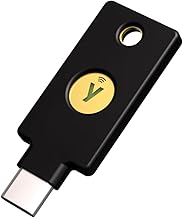
Recommended Solution: YubiKey 5C NFC
Financial institutions should mandate the use of FIDO2 hardware security keys. These devices require physical presence to authenticate. Even if a hacker builds a perfect replica of your login page and tricks an employee into entering their credentials, the attack fails because the hacker does not possess the physical USB key. This is the gold standard for high-value account protection.
Frequently Asked Questions
What is the difference between NIST CSF and ISO 27001?
NIST CSF is a voluntary set of guidelines focused on risk management (Identify, Protect, Detect, Respond, Recover). ISO 27001 is a formal international standard that requires certification via an external audit. NIST is often easier to start with, while ISO is preferred for global business credibility.
Is SOC 2 mandatory for banks?
SOC 2 is not strictly mandatory for the bank itself, but regulators will expect the bank to require SOC 2 Type II reports from all its third-party vendors (like cloud providers or payroll processors) to ensure third-party risk is managed.
How does PCI DSS fit into these frameworks?
PCI DSS (Payment Card Industry Data Security Standard) is a specific regulation for entities that handle credit card data. It is highly prescriptive. You can map PCI DSS controls (like firewall configurations and encryption) to the broader categories within NIST or ISO 27001.
What is the FFIEC Cybersecurity Assessment Tool?
The FFIEC CAT is a diagnostic tool designed specifically for financial institutions to assess their cybersecurity maturity. It incorporates principles from the NIST CSF but tailors them to the specific risk profile of the banking sector.
Why is SMS MFA considered unsafe for finance?
SMS messages are not encrypted and can be intercepted via SS7 network vulnerabilities or SIM swapping attacks. Regulators now push for “phishing-resistant” MFA, such as biometrics or hardware security keys (FIDO2), which cannot be remotely spoofed.