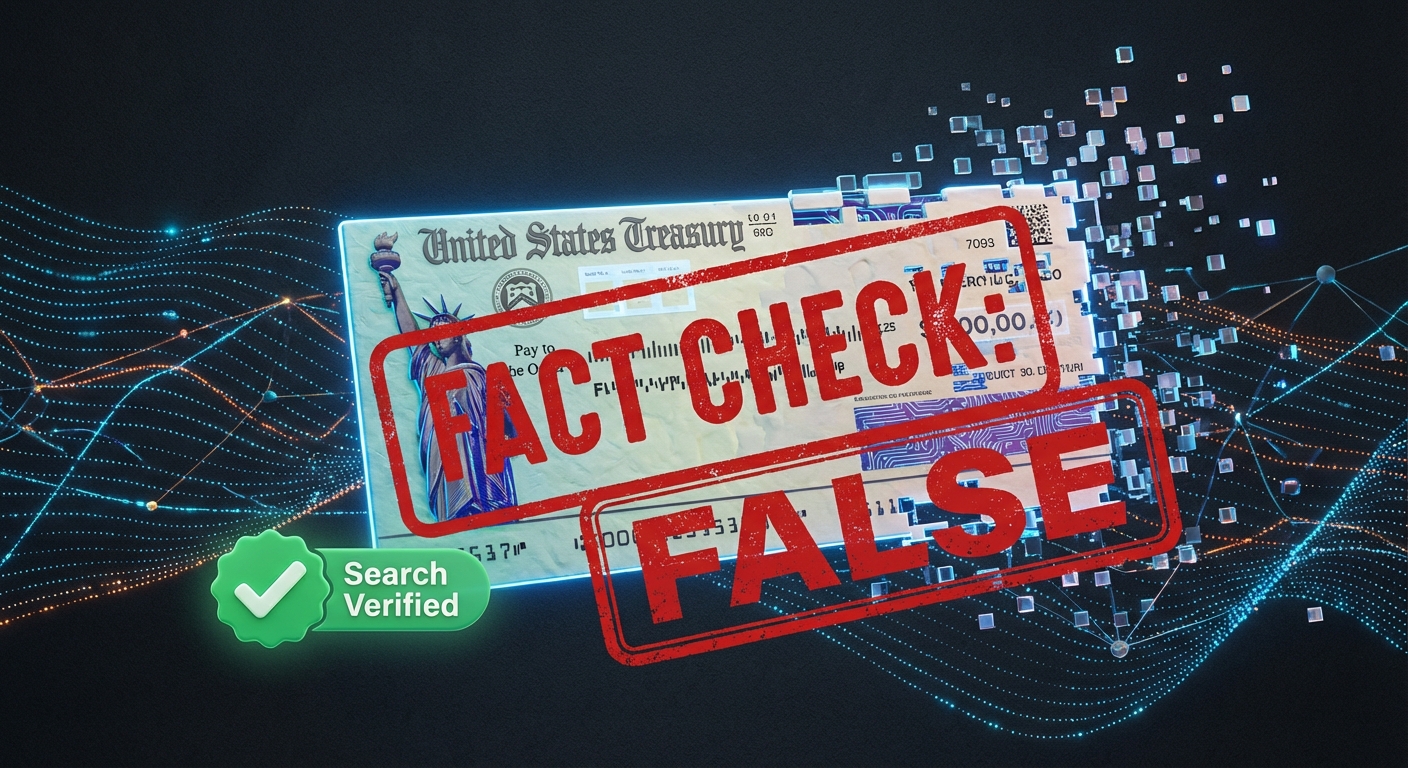
- Fact Check Verdict: Is the Fourth Stimulus Check Real?
- 1. The Viral Claim: $2,000 Payments in October 2025
- 2. The Anatomy of a Stimulus Rumor: Why This Is Happening Now
- 3. Warning: The "Direct Deposit" Email Scam
- 4. State vs. Federal: The Grain of Truth in the Lie
- 5. Protecting Your Identity from Financial Phishing
- Frequently Asked Questions
1. The Viral Claim: $2,000 Payments in October 2025
In recent weeks, a surge of articles and social media posts has circulated, claiming that the IRS is preparing to release a fourth round of Economic Impact Payments. Specifically, these rumors cite precise figures—most commonly $1,390 or $2,000—and allege that deposits will hit bank accounts in October or December 2025.
It is critical to understand the mechanism behind these specific numbers. The “$2,000” figure is a holdover from the legislative debates of 2020 and 2021, where lawmakers pushed for higher relief amounts. Scammers and clickbait sites recycle these old headlines, change the dates to the current year (2025), and republish them to exploit financial anxiety. According to a fact check by Finger Lakes 1, these rumors persist despite a complete lack of Congressional activity on the matter. The federal budget for 2025 does not include provisions for widespread direct cash relief.
Why specificity matters in deception: False claims often use odd, specific numbers like “$1,390” to appear legitimate. This mimics the calculation methods of previous authentic checks (which were based on income sliding scales). However, in this case, the number is a fabrication designed to bypass spam filters and catch user attention.
2. The Anatomy of a Stimulus Rumor: Why This Is Happening Now
Why do these rumors spike in October and December? These months coincide with the start of the federal fiscal year and the holiday season, respectively—times when financial stress is high and users are desperately searching for relief. This creates a “data void” that content farms rush to fill with fake news.
The spread of this misinformation follows a predictable pattern often discussed in guides on how to fact-check viral news claims fast. A low-quality site publishes a speculative article titled “Fourth Stimulus Check Update.” The article body acknowledges that *no* check is coming, but the headline suggests otherwise. Social media algorithms pick up the headline, users share it without reading, and a rumor is born. This cycle is known as “engagement baiting,” where the goal is ad revenue, not accuracy.
Official Verification Methods: To verify any future claims, you should rely solely on official government sources. The IRS Newsroom is the only entity that would announce a nationwide payment. If it is not listed there, it is not happening.
3. Warning: The "Direct Deposit" Email Scam
The most dangerous aspect of these rumors is not false hope, but active theft. Cybercriminals are using the confusion around the “2025 Fourth Stimulus” to launch phishing campaigns. These often arrive as emails or text messages claiming, “Your $2,000 IRS Direct Deposit is Pending. Click here to verify your identity.”
The Mechanism of the Scam: When you click the link, you are taken to a spoofed website that looks identical to the IRS portal. You are asked to enter your Social Security Number, date of birth, and bank account information to “claim” the funds. In reality, you are handing your identity directly to thieves. As noted in recent debunking reports from Cryologyx, no such IRS-approved deposit exists for December 2025. The IRS never initiates contact via email, text, or social media regarding refunds or payments.
If you have already clicked one of these links, you must act immediately to freeze your credit. For a deeper understanding of how these sites operate, you can review our guide on fact-checking websites and debunking misinformation.
4. State vs. Federal: The Grain of Truth in the Lie
One reason these rumors are so persistent is that they often contain a grain of truth. While the *federal* government is not issuing checks, some *state* governments have issued targeted rebates or tax surpluses in the past (e.g., California’s Middle Class Tax Refund or payments in Minnesota).
Understanding the Difference:
- Federal Stimulus: Approved by Congress, signed by the President, goes to all qualifying Americans (e.g., CARES Act). Status: Inactive.
- State Rebates: Approved by state legislatures, funded by state budget surpluses, goes only to residents of that state. Status: Varies by state.
Content farms often conflate these two. They will take a small rebate news story from a single state (like a $500 rebate in New Mexico) and write a headline that implies a national $2,000 check. Always check your specific state’s Department of Revenue website for accurate local information.
5. Protecting Your Identity from Financial Phishing
With the rise of these stimulus scams, your personal financial data is more vulnerable than ever. Scammers are not just looking for a quick payout; they are looking to steal your identity to file fraudulent tax returns in your name next year. The best defense is proactive education and securing your digital footprint.
We highly recommend equipping yourself with resources that explain the mechanics of identity theft. “The Truth About Identity Theft and How to Fight Back” is an excellent resource that breaks down exactly how these criminals operate and how to lock down your credit before damage is done.

For younger readers or those helping family members navigate these complex financial rumors, having a solid foundation in personal finance is crucial to spotting “too good to be true” offers. “Personal Finance for Teens and Young Adults” is a top-rated guide that builds the financial literacy needed to distinguish between legitimate government aid and predatory scams.

Frequently Asked Questions
Is there a $2,000 Fourth Stimulus Check coming in 2025?
No. There is no federal legislation authorized or pending for a fourth stimulus check in 2025. Rumors suggesting otherwise are false and often originate from unreliable news aggregators or scam websites.
Why am I seeing articles about a $1,390 payment?
These articles often mislead readers by recycling old news or conflating state-specific tax rebates with federal stimulus checks. The specific amount of $1,390 is likely a fabrication designed to look official to bypass skepticism.
How can I tell if a stimulus check email is a scam?
The IRS does not send emails, text messages, or social media messages requesting personal or financial information. If you receive a message claiming you have a “pending direct deposit” that requires you to click a link, it is a scam.
Are any states sending out relief payments in 2025?
Some states may issue surplus tax refunds or rebates based on local budget legislation (e.g., Minnesota or New Mexico have done so in the past). However, these are not federal “stimulus checks” and eligibility is strictly limited to residents of those states.
Where can I verify IRS payments officially?
The only official source for federal payment information is IRS.gov. Specifically, check the “Newsroom” section for press releases or your specific tax account status on their secure portal.