- Direct Answer: What is the 2025 Graphene Breakthrough?
- 1. Rhombohedral Graphene: The New Superconductor Standard
- 2. Magic-Angle Twisted Trilayer Graphene (MATTG) Explained
- 3. Chiral Superconductivity: Mixing Magnetism and Electricity
- 4. How AI is accelerating Superconductor Discovery
- 5. Real-World Applications: From Labs to Laptops
- 6. Recommended Solution: Graphene Tech You Can Use Now
- Frequently Asked Questions
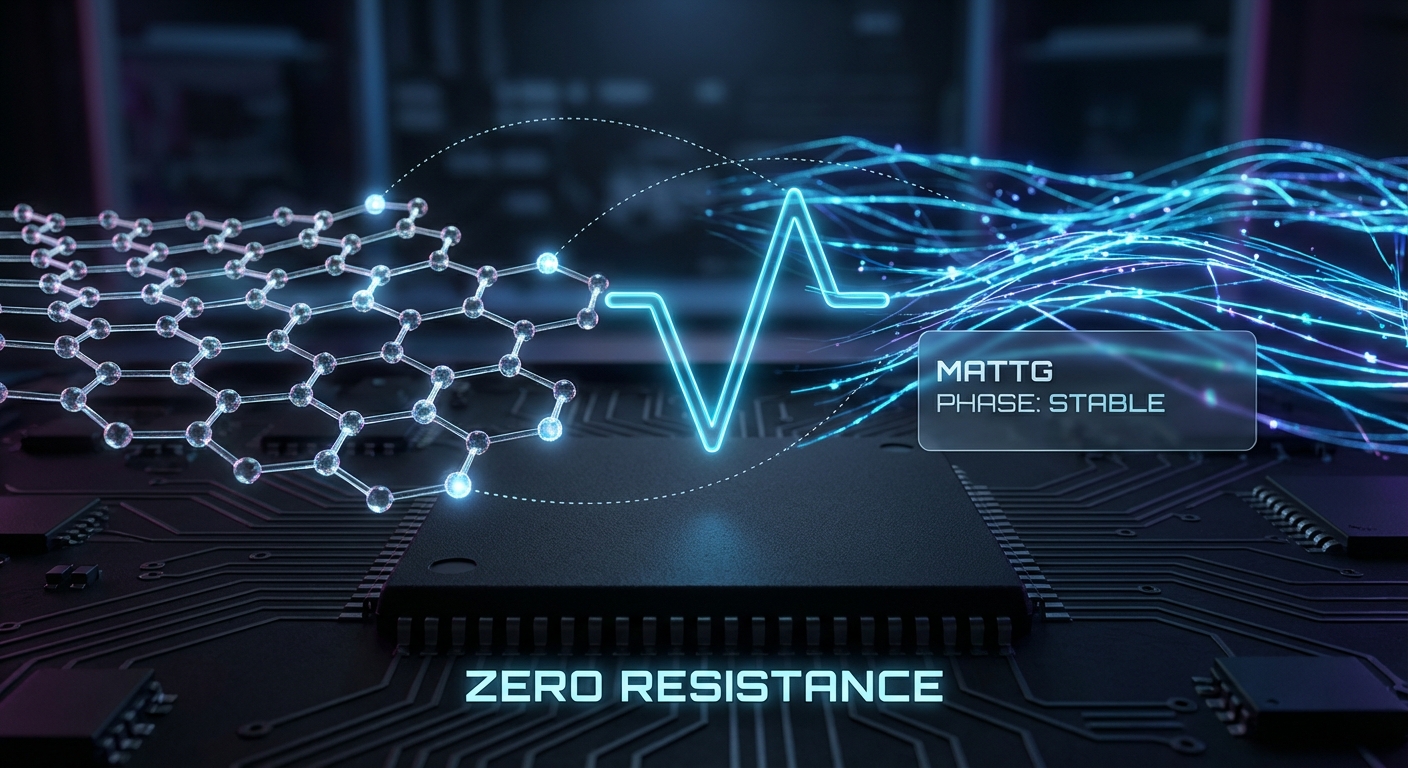
Graphene superconductor innovations in 2025 are defined by the stabilization of rhombohedral graphene and magic-angle twisted trilayer graphene (MATTG). Unlike standard single-layer sheets, these multi-layered structures exhibit unconventional superconductivity—conducting electricity with zero resistance—when cooled to ultralow temperatures. The key mechanism is the formation of a "V-shaped" superconducting gap and chiral properties, which allow these materials to function simultaneously as superconductors and magnets, opening the door for lossless energy transmission and quantum computing.
1. Rhombohedral Graphene: The New Superconductor Standard
For years, researchers have focused on the hexagonal "honeycomb" lattice of standard graphene. However, the real breakthrough of 2025 lies in a specific stacking order known as rhombohedral graphene. In this configuration, three or more layers of graphene are stacked so that their atoms are slightly offset, creating a unique crystal structure that promotes intense electron interactions.
According to recent findings by the University of Texas at Dallas, this specific stacking allows the material to become a tunable semiconductor. By applying a simple electric field (a gate field), scientists can toggle the material between conducting and insulating states. This is critical because it mimics the behavior of silicon transistors but with the potential for zero energy loss. The mechanism here is "Berry curvature," a geometric property of the electron wavefunctions that drives these exotic quantum states.
A common misconception is that all graphene is the same. Standard Bernal-stacked graphene (the kind found in graphite pencils) does not exhibit these robust superconducting properties. It is the precise rhombohedral alignment that forces electrons to slow down and interact, forming the "Cooper pairs" necessary for superconductivity.
2. Magic-Angle Twisted Trilayer Graphene (MATTG) Explained
The concept of "magic-angle" graphene has evolved from a theoretical curiosity to a cornerstone of 2025 nanotechnology. This involves stacking layers of graphene and twisting the top layer by a precise angle—often around 1.1 degrees. This twist creates a moiré pattern, a superlattice that radically changes the material’s electronic band structure.
New research from MIT physicists has observed "unconventional superconductivity" in twisted trilayer graphene (MATTG). Unlike traditional superconductors that follow the BCS theory (where lattice vibrations glue electrons together), MATTG exhibits a V-shaped superconducting gap. This indicates a completely different, likely electron-driven, pairing mechanism.
Why does this matter?
Standard superconductors require bulky cooling equipment (liquid helium) to work. The "unconventional" nature of MATTG suggests it could be the stepping stone toward room-temperature superconductors. If we can understand the "glue" holding these electron pairs together in twisted graphene, we can replicate it in materials that work at ambient temperatures, revolutionizing everything from MRI machines to power grids.
3. Chiral Superconductivity: Mixing Magnetism and Electricity
One of the most startling discoveries of 2025 is the identification of chiral superconductivity in pentalayer (five-layer) rhombohedral graphene. Historically, magnetism and superconductivity have been enemies; magnetic fields usually destroy the delicate superconducting state. However, in this new chiral form, they coexist.
This material allows for electrical conduction with zero resistance while exhibiting magnetic properties. This is achieved through spontaneous symmetry breaking, where the electrons choose a preferred direction of motion. This directional flow is crucial for the development of topological quantum computers, which use these stable electron paths to store information that is immune to outside interference.
This advancement parallels the broader trend of material convergence we see in commercial graphene applications, where singular materials are being engineered to perform multiple functions (strength, conductivity, and flexibility) simultaneously.
4. How AI is Accelerating Superconductor Discovery
The pace of these discoveries is not solely due to better microscopes; it is being driven by Artificial Intelligence. Analyzing the quantum interactions in a kagome lattice or a twisted graphene sheet involves solving complex many-body problems that would take humans decades.
As noted in recent reports on AI-driven material science, algorithms are now predicting which atomic configurations will yield superconductivity before a physical sample is even synthesized. AI models analyze the electron density and spin fluctuations to identify "sweet spots" in the phase diagram.
This integration of machine learning mirrors the AI intelligence trends in green tech, where data is used to optimize physical systems. In the context of superconductors, AI allows researchers to bypass the "trial and error" phase and move directly to synthesizing high-potential candidates like cesium vanadium antimonide.
5. Real-World Applications: From Labs to Laptops
While the physics is complex, the end-game applications are tangible. The advancements in graphene superconductors are set to disrupt several key industries:
- Quantum Computing: Chiral graphene superconductors provide the stable "qubits" needed for error-free quantum processing.
- Medical Imaging: Higher temperature superconductors could lead to portable MRI machines that don’t require massive liquid helium tanks.
- Energy Grids: Zero-resistance cables could transmit electricity across continents without losing a single watt of power.
For a broader look at how these innovations fit into the global tech landscape, check our 2025 weekly news roundup, which covers the intersection of scientific breakthrough and market reality.
6. Recommended Solution: Graphene Tech You Can Use Now
You don’t have to wait for a quantum computer to benefit from graphene technology. The material’s thermal conductivity is already improving consumer electronics by preventing overheating in high-performance devices.
UGREEN 145W Graphene-Enhanced Power Bank
This device is a prime example of graphene’s commercial utility. By integrating graphene composite layers, this power bank manages the intense heat generated during 145W fast charging. Standard lithium batteries would degrade rapidly under this thermal stress, but graphene’s superior heat dissipation keeps the cells healthy, allowing you to charge a MacBook Pro and an iPhone simultaneously at top speed.

Frequently Asked Questions
What is the difference between single-layer and rhombohedral graphene?
Single-layer graphene is one sheet of carbon atoms. Rhombohedral graphene consists of three or more layers stacked in a specific offset pattern (ABC stacking). This stacking creates unique electronic bands that allow for tunable superconductivity and magnetism, which single layers typically lack.
Why is the "magic angle" 1.1 degrees?
At exactly 1.1 degrees of twist, the electronic bands of the two graphene layers flatten out. This "flat band" means electrons stop moving quickly and start interacting strongly with each other. These strong interactions are what enable superconductivity.
Are these superconductors room-temperature yet?
Not yet. Most graphene superconductors still operate at ultracold temperatures (near absolute zero). However, the discovery of unconventional mechanisms (like the V-shaped gap) provides a roadmap to engineer materials that could work at higher temperatures in the future.
How does AI help find new materials?
AI analyzes vast databases of crystal structures and electron behaviors to predict properties. Instead of physically testing 1,000 materials, scientists can use AI to simulate them and identify the top 5 candidates that are most likely to be superconductors.
What is chiral superconductivity?
Chiral superconductivity is a rare state where the superconducting order parameter has a "handedness" (like left vs. right hand). This allows the material to break time-reversal symmetry and support edge currents that flow without resistance, even in the presence of magnetic fields.