- What Are the Main Healthcare Policy Changes for 2025?
- 1. The ‘One Big Beautiful Bill’ and Medicaid Overhaul
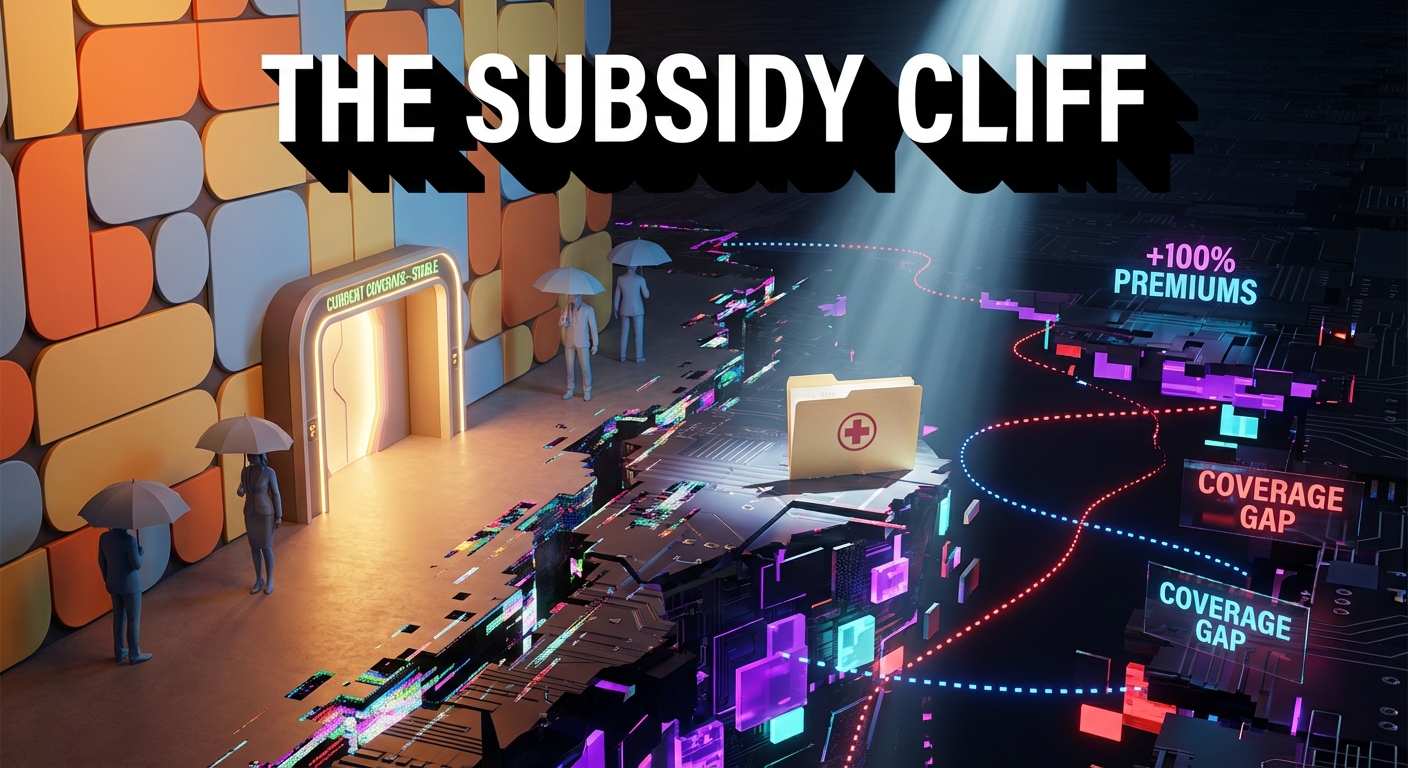
- 2. The Subsidy Cliff: Why Premiums May Double
- 3. New CMS Integrity Rules: The Verification Trap
- 4. State-Level Impact: The Michigan Warning
- 5. Action Plan: How to Prepare Your Finances
- Frequently Asked Questions
Healthcare policy changes in 2025 revolve around the ‘One Big Beautiful Bill Act’ (OBBBA) and the expiration of enhanced ACA subsidies. Key shifts include stricter Medicaid eligibility (work requirements), the removal of auto-renewal for Marketplace plans, and new income verification hurdles. Without legislative intervention, millions face the ‘subsidy cliff,’ where premiums for subsidized enrollees could more than double by 2026.
1. The ‘One Big Beautiful Bill’ and Medicaid Overhaul
The legislative landscape for 2025 is dominated by the introduction of the One Big Beautiful Bill Act (OBBBA) of 2025. While the name suggests improvement, the American Medical Association (AMA) has issued warnings that these provisions effectively reduce access to care for vulnerable populations. The bill introduces fundamental structural changes to Medicaid, moving away from the open-ended federal matching funds that states have relied on for decades.
One of the most aggressive changes is the implementation of strict work and eligibility requirements. Previously, Medicaid served as a safety net based primarily on income. Under the new 2025 guidance, enrollees may need to prove active employment or community service hours to maintain coverage. This adds an administrative burden that historically leads to “churn”—where eligible people lose coverage simply because they cannot keep up with the paperwork.
Furthermore, the bill restricts how states can finance their share of Medicaid through provider taxes. This technical change might seem obscure, but its impact is massive: it forces states to either cut benefits or raise taxes elsewhere to fill the budget gap. As noted in recent AMA advocacy reports, this could destabilize the healthcare safety net just as costs are rising.
2. The Subsidy Cliff: Why Premiums May Double
The most immediate financial threat to the average consumer is the expiration of the enhanced premium tax credits. These credits, originally expanded during the pandemic, capped the amount Americans pay for health insurance at 8.5% of their income. Unless Congress acts to extend them in the 2025 Budget Reconciliation Act, these enhancements will expire at the end of 2025, leading to what experts call the “Subsidy Cliff” in 2026.
According to analysis by the Kaiser Family Foundation (KFF), if these credits expire, premium payments for subsidized enrollees will more than double on average. For a 60-year-old making just above the poverty line, premiums could skyrocket from near-zero to hundreds of dollars per month. This isn’t just inflation; it is a policy reset that removes the financial floor for millions of middle-income families.
Recommended Solution: Sooez Accordion File Organizer
With the expiration of subsidies, you will likely need to requalify for different tiers of aid or switch plans. This requires managing tax returns, income statements, and new enrollment forms. We recommend using a dedicated document organizer to keep your verification papers ready for the shortened enrollment window.

3. New CMS Integrity Rules: The Verification Trap
In addition to cost increases, the CMS Marketplace Integrity and Affordability rule has introduced new friction into the enrollment process. For years, the focus was on getting as many people covered as possible. The 2025 pivot focuses on “program integrity,” which is policy-speak for stricter income verification requirements.
Starting with the 2026 coverage year (enrollment late 2025), the “auto-renewal” safety net is effectively gone for many. If your reported income does not perfectly match federal data hubs, you may be required to manually submit proof of income within a tight timeframe. Failure to do so could result in the termination of your premium tax credits. This is particularly dangerous for gig workers and the self-employed, whose income fluctuates.
This shift parallels broader government trends in data security. Just as we discussed in our guide on Zero Trust Architecture for identity protection, the government is moving toward a “verify everything” model. You can no longer rely on the system to give you the benefit of the doubt; you must proactively prove your eligibility.
4. State-Level Impact: The Michigan Warning
While federal changes grab headlines, state-level reactions will determine your day-to-day reality. Michigan has become a bellwether for how states might fight back. The Governor’s office recently issued Executive Directive 2025-6, explicitly describing the federal rollback as “the largest cuts to health care” in recent history.
The Michigan directive highlights a critical detail often missed: shortened open enrollment periods. The federal changes may reduce the time you have to sign up for a plan, and they impose new administrative burdens that states are forced to implement. Michigan is attempting to mitigate this by increasing state-level outreach, but residents in states without such protections may find themselves locked out of coverage if they miss the new, tighter deadlines.
This fragmentation of policy means where you live matters more than ever. As noted in our analysis of recent government policy changes, executive orders at both the state and federal levels are rapidly altering the social safety net, often without passing new laws through Congress.
5. Action Plan: How to Prepare Your Finances
Waiting until the Open Enrollment period begins in November 2025 is a mistake. The combination of the OBBBA, subsidy expiration, and verification rules creates a “perfect storm” for coverage gaps. Here is a strategic plan to protect your household.
- Audit Your Income Early: If you are self-employed, ensure your tax returns for 2024 are filed early and accurately. The new CMS rules rely on this data for verification.
- Budget for the ‘Subsidy Cliff’: Assume your premiums might double in 2026. Start setting aside a “healthcare emergency fund” now to cover the first few months of higher premiums while you shop for alternatives.
- Update Your Address: Medicaid programs will be mailing eligibility checks. If your address is outdated, you will miss the notice and lose coverage automatically.
- Watch the ‘Benchmark’ Plan: Subsidy amounts are tied to the cost of the “second-lowest-cost Silver plan.” If insurers raise rates disproportionately in your area, your subsidy might not stretch as far as it used to.
Recommended Tool: Bill Tracker Notebook
With premiums and deductibles in flux, tracking your medical expenses is vital for tax deductions. A physical logbook ensures you have a backup record of payments if digital portals crash during the high-traffic enrollment period.
Frequently Asked Questions
Will my ACA Marketplace premium go up in 2025?
Most likely, yes. Even before the subsidy expiration in 2026, inflation and rising healthcare utilization are driving up base premiums. If you receive subsidies, your net cost might remain stable for 2025, but you should prepare for a significant hike in 2026 if Congress does not extend the enhanced tax credits.
What is the ‘One Big Beautiful Bill’ Act?
The OBBBA is a 2025 legislative package that proposes major structural changes to Medicaid and the ACA. Its primary goal is to reduce federal spending by implementing stricter work requirements for Medicaid and adding verification steps for tax credits, which critics argue will reduce access to care.
How do I prove my income for the new CMS rules?
You will need to provide documents that verify your projected annual income. This typically includes recent pay stubs, your most recent federal tax return (Form 1040), or a net profit statement if you are self-employed. Under the new rules, failure to upload these promptly can result in a loss of subsidies.
Who is most affected by the Medicaid changes?
Low-income adults who qualify for Medicaid through the ACA expansion are most at risk. The new work requirements and eligibility checks target this specific demographic, potentially removing millions from the rolls if they cannot meet the administrative reporting requirements.
Can I still auto-renew my health insurance plan?
While the option may technically exist, it is dangerous to rely on it for 2026 coverage. The new CMS rules mean that auto-renewal might default you into a plan without subsidies if your income data doesn’t match, causing your premium to spike unexpectedly. Manual renewal is strongly advised.