- Direct Answer: How Do mRNA Vaccines Work?
- 1. The Core Mechanism: mRNA as Biological Software
- 2. The Delivery System: Lipid Nanoparticles (LNPs)
- 3. Innate Immune Activation: The First Line of Defense
- 4. From Innate to Adaptive: T-Cells and Antibodies
- 5. The ‘Secret Sauce’: Nucleoside Modification
- 6. Recommended Reading
- Frequently Asked Questions
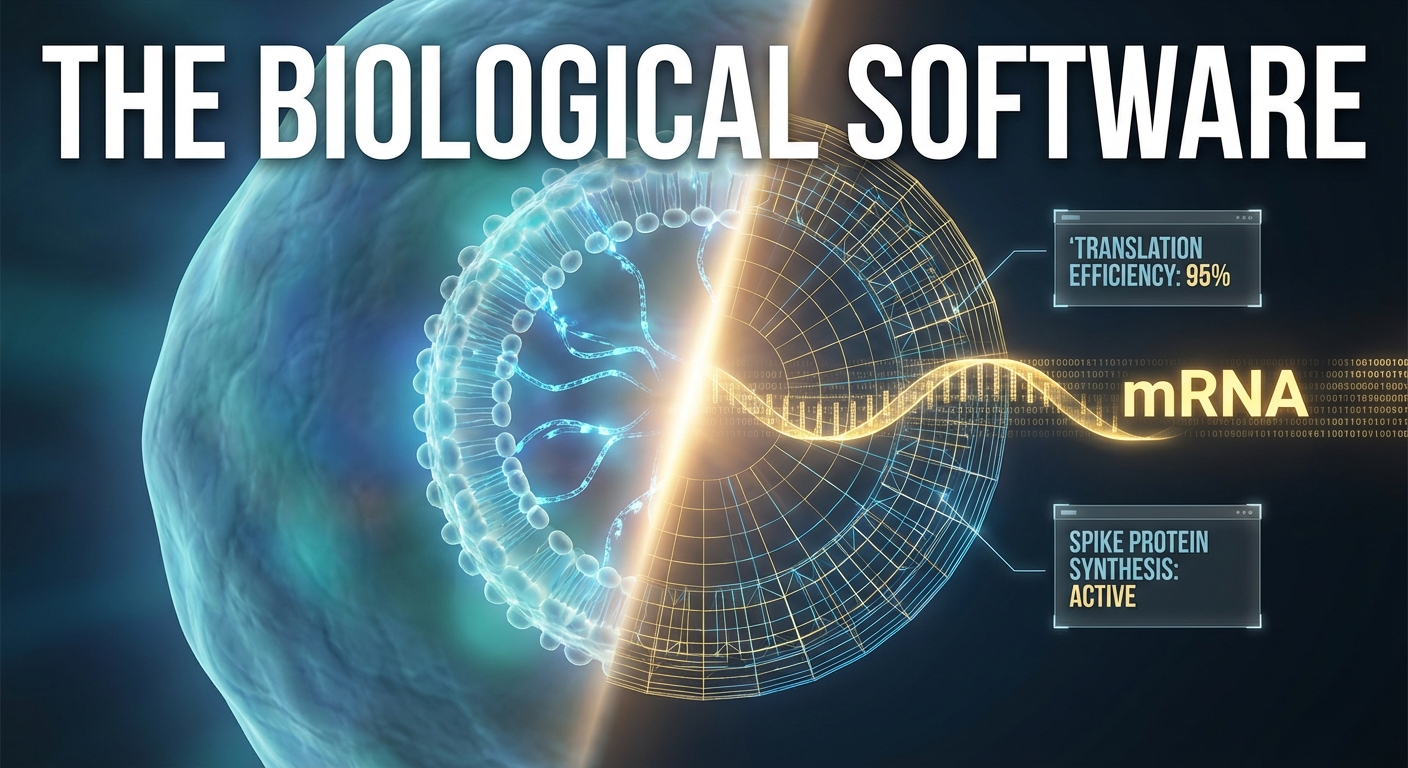
mRNA vaccines work by introducing a synthetic instruction manual into your cells. Unlike traditional vaccines that use weakened viruses, mRNA vaccines use a sequence of genetic code encapsulated in a lipid nanoparticle (LNP). Once inside the muscle cell, the mRNA instructs the ribosomes to produce a harmless piece of the viral spike protein. The immune system detects this protein as foreign, triggering the production of antibodies and activating T-cells, which prepares the body to fight the actual virus upon future exposure.
1. The Core Mechanism: mRNA as Biological Software
To understand the immunology breakthrough of mRNA vaccines, it helps to think of the human cell as a 3D printer. In this analogy, DNA is the hard drive where all the blueprints are stored, and ribosomes are the printers that build proteins. Messenger RNA (mRNA) is the USB stick that carries the specific file from the hard drive to the printer.
The ‘Plug-and-Play’ Revolution
Traditional vaccines require growing massive amounts of virus in chicken eggs or mammalian cells—a process that can take months. mRNA technology bypasses this by synthesizing the instruction code in a lab. As described by the CDC, the vaccine simply delivers the "file" (the mRNA sequence for the spike protein) directly to the ribosomes. This allows for rapid development and adaptation to new variants, a shift that many experts compare to moving from analog to digital therapeutics.
Crucially, this mRNA is transient. It does not enter the nucleus where your DNA is kept, and it is degraded by cellular enzymes within days after the protein is made. This ensures the "instruction" is temporary, but the immunity is lasting.
2. The Delivery System: Lipid Nanoparticles (LNPs)
The real challenge in developing these vaccines wasn’t just writing the genetic code; it was delivery. Naked mRNA is incredibly fragile and is almost immediately destroyed by the body’s enzymes if injected alone.
The Fat Bubble Solution
Scientists solved this by wrapping the mRNA in a Lipid Nanoparticle (LNP). This is essentially a tiny fat bubble made of four specific lipids:
- Ionizable lipids: These bind to the negatively charged mRNA and allow the particle to release its cargo once inside the cell.
- PEGylated lipids: These stabilize the particle and prevent it from being cleared too quickly by the immune system.
- Phospholipids and Cholesterol: Structural components that give the particle its shape.
For a broader context on how nanotechnology is reshaping medicine, you can read our analysis of nanotech breakthroughs, which highlights similar advancements in material handling at the microscopic scale.
3. Innate Immune Activation: The First Line of Defense
Once the vaccine is injected, the first response isn’t antibodies—it’s the innate immune system. This is the body’s rapid-response team. According to research published in the JCI Insight, the LNPs themselves act as an adjuvant, meaning they help wake up the immune system.
Cytokines and Interferons
When immune cells (like monocytes and dendritic cells) detect the vaccine components, they trigger specific sensors called Toll-like receptors (TLRs). This activation leads to the release of proinflammatory cytokines (like IL-6) and Type I Interferons (IFNs). These chemical messengers recruit more immune cells to the site of injection (causing the sore arm) and create an inflammatory environment that is necessary to prime the adaptive immune system.
4. From Innate to Adaptive: T-Cells and Antibodies
The ultimate goal of vaccination is to train the adaptive immune system—the special forces that remember specific threats.
The Role of Tfh Cells and B Cells
As the muscle cells produce the spike protein, specialized "Antigen-Presenting Cells" (APCs) grab these proteins and show them to T-cells. Specifically, T follicular helper (Tfh) cells play a critical role. They effectively "coach" B-cells to produce high-quality, neutralizing antibodies that can lock onto the virus and stop it from entering cells.
The CD8+ T-Cell Response
Simultaneously, the vaccine trains CD8+ Killer T-cells. These cells are trained to seek out and destroy any cell that has been infected by the virus. As noted by the National Institutes of Health (NIH), this dual-arm response (Antibodies + T-cells) is why mRNA vaccines offer robust protection against severe disease even if antibody levels wane over time. For more on how advanced therapies leverage T-cells, see our guide to CAR T-cell therapy.
5. The ‘Secret Sauce’: Nucleoside Modification
For decades, mRNA therapy failed because the body’s immune system attacked the foreign mRNA too aggressively, causing toxic inflammation before any protein could be made. The breakthrough came from Katalin Karikó and Drew Weissman, who discovered nucleoside modification.
Stealth Mode Enabled
By swapping out one of the genetic building blocks (uridine) for a modified version (pseudouridine), they created mRNA that could slip past the body’s innate "alarms" (specifically TLR7 and TLR8). This modification reduced inflammatory toxicity and increased protein production by 1,000-fold, making the vaccines viable for human use.
6. Recommended Reading
The story of how this technology was developed is one of the most compelling scientific sagas of our time. Walter Isaacson’s biography of Jennifer Doudna and the gene-editing revolution provides the essential context for understanding this era of "programmable medicine."

Frequently Asked Questions
Do mRNA vaccines change your DNA?
No. mRNA is a genetic instruction that functions in the cytoplasm of the cell, not the nucleus where DNA is stored. It lacks the biological mechanism (integrase enzymes) to enter the nucleus or alter your genetic code.
How long does the mRNA stay in the body?
The mRNA is incredibly fragile. Once it delivers its instructions to the ribosomes, cellular enzymes break it down within a few days. The spike protein it creates may persist for a few weeks to train the immune system, but the mRNA itself is short-lived.
Why do mRNA vaccines cause side effects like fever?
Side effects like fever, fatigue, or muscle aches are signs of reactogenicity. They indicate that your innate immune system is responding to the lipid nanoparticles and cytokines (like Interferons) are being released to prime the body for defense.
Are lipid nanoparticles safe?
Yes. The lipids used in these vaccines are cleared by the body through natural metabolic pathways. While rare allergic reactions (anaphylaxis) can occur, typically due to the PEG component, they are treatable and statistically very uncommon.
Can mRNA technology be used for cancer?
Yes. The original research into mRNA was largely focused on cancer. By encoding unique tumor antigens into the mRNA, scientists can train the immune system to recognize and attack specific cancer cells. Trials for melanoma and pancreatic cancer vaccines are currently underway.