- Quick Summary: The 4 Core Identification Methods
- 1. Traditional Morphological Identification: The Foundation
- 2. Molecular Techniques: eDNA and Proteomics (MALDI-TOF)
- 3. Optical and Acoustic Methods: NIRS and Photo-ID
- 4. Essential Field Tools for Divers and Researchers
- 5. Challenges in Modern Biodiversity Assessments
- Frequently Asked Questions
What are the most effective techniques for identifying marine species?
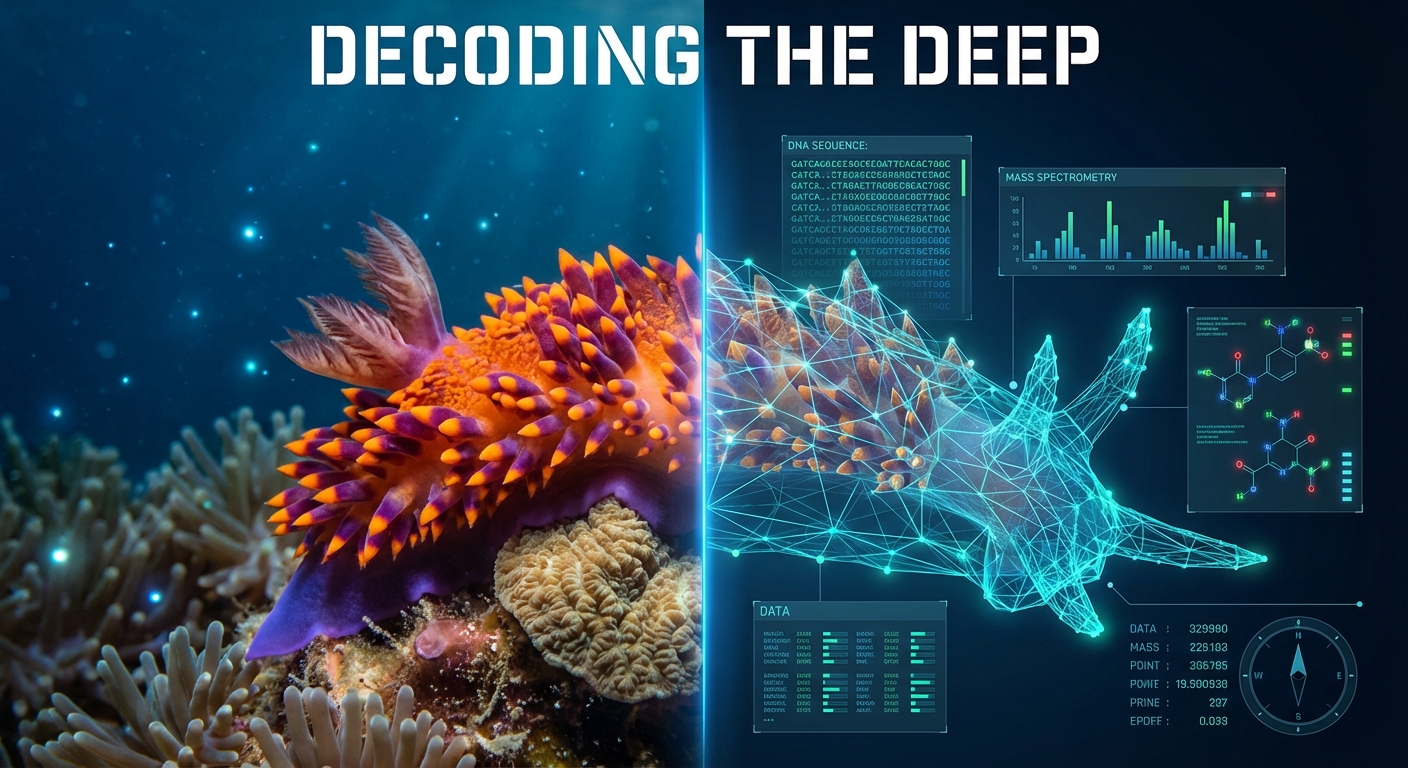
Marine species identification relies on four primary techniques: Morphological Analysis (visual assessment of physical traits using dichotomous keys), Proteomic Fingerprinting (specifically MALDI-TOF MS for rapid protein profiling), Genetic Analysis (using eDNA from seawater to detect presence), and Optical/Acoustic Methods (such as NIRS for fish otoliths and photo-ID for marine mammals).
1. Traditional Morphological Identification: The Foundation
Before the advent of genetic sequencing, marine biology relied entirely on morphological identification. This method involves examining the physical characteristics of a specimen—such as fin shape, scale count, spine arrangement, or tentacle structure—and comparing them against a standard reference. This process is formalized through the use of dichotomous keys, a tool that presents the user with a series of binary choices (e.g., “Does the fish have two dorsal fins or one?”) that eventually lead to the correct species classification.
The Mechanism:
Morphological ID is grounded in taxonomy. Scientists use microscopes to count meristic traits (countable features like fin rays) and measure morphometric traits (ratios of body parts). For example, distinguishing between similar species of rockfish often requires counting the microscopic pores on their mandibles. According to the Census of Marine Life, this remains the primary method for initial field sorting, validated by databases like the World Register of Marine Species (WoRMS).
Common Mistake:
A major pitfall in traditional ID is phenotypic plasticity. Many marine species change color or shape based on their environment, age, or gender (e.g., the Parrotfish). Relying solely on color can lead to misidentification. For a deeper understanding of deep-sea species where morphology gets truly bizarre, read our report on Deep Ocean Exploration and Latest Discoveries.
2. Molecular Techniques: eDNA and Proteomics (MALDI-TOF)
When physical traits are ambiguous or the specimen is microscopic, modern science turns to molecular biology. Two revolutionary technologies are currently reshaping the field: MALDI-TOF MS and eDNA.
Proteomic Fingerprinting (MALDI-TOF MS):
Matrix-Assisted Laser Desorption/Ionization Time-of-Flight Mass Spectrometry (MALDI-TOF MS) is a technique originally used in clinical microbiology but now adapted for marine metazoans. As detailed in a recent study published in Nature, this method creates a unique “protein fingerprint” of an organism. It is faster and significantly cheaper than DNA barcoding. Researchers can smear a tiny sample of tissue onto a plate, zap it with a laser, and compare the resulting mass spectrum against a library to identify the species in minutes.
Environmental DNA (eDNA):
You no longer need to catch the fish to know it’s there. Organisms constantly shed genetic material—scales, mucus, waste—into the water. Scientists can filter seawater and sequence this eDNA to detect the presence of specific species. This is particularly useful for monitoring elusive or endangered species without disturbing the habitat.
3. Optical and Acoustic Methods: NIRS and Photo-ID
For larger animals or fisheries management, non-invasive optical tools are preferred. Near-Infrared Spectroscopy (NIRS) has emerged as a rapid tool for fisheries. NOAA researchers have successfully used NIRS to analyze otoliths (fish ear stones). By shining near-infrared light on the otolith, the device measures how light interacts with the chemical structure, instantly identifying the species and even the specific population origin.
Marine Mammal Photo-Identification:
For whales and dolphins, the “fingerprint” is often the trailing edge of a dorsal fin or the fluke. Researchers use high-resolution photography to capture nicks, scars, and pigment patterns. Software then matches these photos against global catalogs. This method is crucial for calculating population sizes using mark-recapture statistics.
4. Essential Field Tools for Divers and Researchers
While mass spectrometers are great for the lab, field researchers and scientific divers need rugged, immediate solutions. A waterproof field guide is the first line of defense against misidentification. You need a reference that can withstand saltwater and provide clear, color-accurate plates.
Recommended Solution: National Audubon Society Field Guide to Seashore Creatures
This is the gold standard for North American coastal research. It features high-quality photographs rather than illustrations, which is critical for verifying the texture and color nuances of invertebrates.

For those specializing in marine mammals, having a quick-reference slate is vital when observing from a moving boat deck.

5. Challenges in Modern Biodiversity Assessments
Identifying species is becoming harder due to climate change. As ocean temperatures rise, species are migrating to new latitudes (a phenomenon known as tropicalization), mixing communities in unprecedented ways. This makes regional field guides obsolete faster than before.
Furthermore, cryptic species—organisms that look identical morphologically but are genetically distinct—pose a massive challenge. Traditional visual surveys might group three different species of coral as one, leading to inaccurate biodiversity data. This is why integrating molecular data with visual surveys is the future of the field. For more context on how data analysis is tracking these environmental shifts, read our article on Climate Change Data Analysis.
Frequently Asked Questions
How does MALDI-TOF MS compare to DNA barcoding?
MALDI-TOF MS is significantly faster and cheaper per sample than DNA barcoding. While DNA provides a more definitive phylogenetic placement, MALDI-TOF is superior for rapid, high-volume sorting of known species, making it ideal for large-scale biodiversity surveys.
What is a dichotomous key in marine biology?
A dichotomous key is a scientific tool that allows the user to determine the identity of items in the natural world. It consists of a series of choices that lead the user to the correct name of a given organism. “Dichotomous” means “divided into two parts,” representing the two choices at each step.
Can eDNA identify the exact number of fish in an area?
Generally, no. eDNA is excellent for determining presence or absence and relative abundance (biomass), but it is difficult to count exact individuals because the amount of DNA shed can vary by animal size, stress levels, and water temperature.
What are otoliths and why are they used for ID?
Otoliths are calcium carbonate structures found in the inner ear of fish. They grow in layers like tree rings. They are used for identification because their shape is species-specific, and their chemical composition records the environmental history of the fish.
Where can I find a database of correct marine species names?
The most authoritative global database is the World Register of Marine Species (WoRMS). It is curated by taxonomists and is the standard for checking the validity of scientific names and synonyms.