- Quick Summary: The 2025 Mars Breakthroughs
- 1. The ‘Cheyava Falls’ Anomaly: Potential Biosignatures Detected
- 2. Siderite Discovery: Evidence of an Ancient Thick Atmosphere
- 3. Beyond Rust: Kaolinite, Spinel, and Water History
- 4. Martian Regolith vs. Earth Soil: A Technical Comparison
- 5. The Logistics of the Sample Return Mission
- Frequently Asked Questions
What are the latest Mars rover discoveries in 2025?
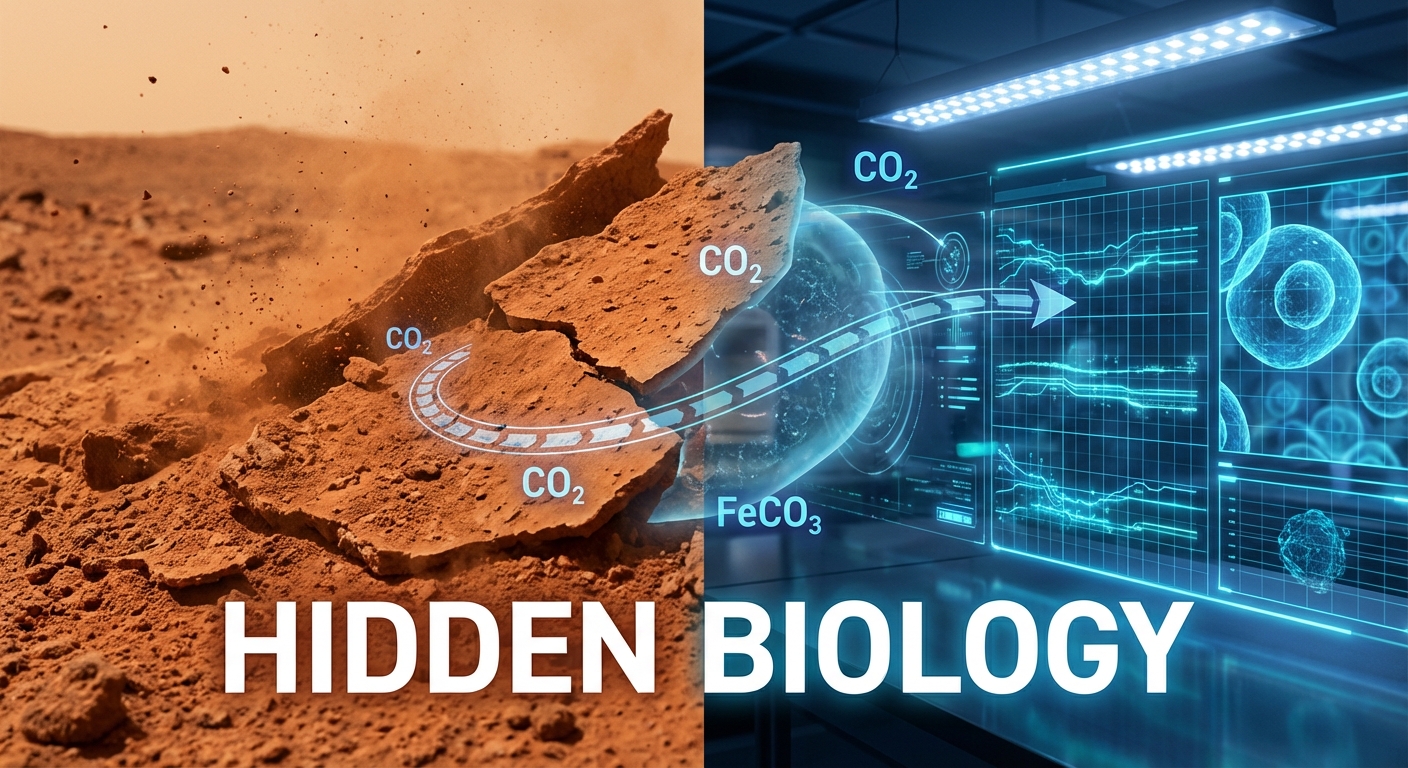
In 2025, the Perseverance rover identified compelling potential biosignatures (organic carbon, sulfur, and phosphorus) in the ‘Cheyava Falls’ rock sample within Jezero Crater. Simultaneously, the Curiosity rover discovered siderite (iron carbonate) in Gale Crater, providing the first concrete chemical evidence of an ancient, thick CO2 atmosphere capable of supporting liquid water. These findings collectively suggest Mars had a long-standing habitable environment suited for microbial life.
1. The ‘Cheyava Falls’ Anomaly: Potential Biosignatures Detected
The term “biosignature” is often misused in pop science media, leading to premature celebrations of alien life. However, the discovery at the “Cheyava Falls” rock sample by the Perseverance rover in 2025 is scientifically significant because it combines three critical indicators in a single location: organic carbon, energy sources (sulfur and oxidized iron), and evidence of liquid water interaction.
The Mechanism of Discovery: The rover utilized its SHERLOC (Scanning Habitable Environments with Raman & Luminescence for Organics & Chemicals) instrument to map the distribution of organic molecules on the rock’s surface. Unlike previous detections which were scattered, these organics were spatially correlated with sulfate minerals. This suggests that the organic matter was trapped within the minerals as they precipitated from water, acting as a “time capsule” that protects the molecular structure from the harsh radiation on the Martian surface.
Why This Matters: Finding organic carbon alone is not proof of life; it can be created by non-biological geological processes. However, the specific presence of irregularly shaped white calcium sulfate veins flanked by reddish bands of hematite suggests a chemical reaction that terrestrial microbes often utilize for energy. While NASA officials remain cautious, stating that non-biological processes have not been ruled out, this sample is currently the strongest candidate for life detection ever collected.
A Common Misconception: Many believe the rover can “see” bacteria. It cannot. The instruments detect chemical gradients and mineral structures at a microscopic scale. The definitive proof will only come when these samples are returned to Earth and analyzed by powerful synchrotrons and electron microscopes, capable of identifying isotopic ratios that biology leaves behind.
2. Siderite Discovery: Evidence of an Ancient Thick Atmosphere
While Perseverance hunts for biology in Jezero Crater, the Curiosity rover in Gale Crater has solved a major planetary physics puzzle. For decades, climate models suggested Mars must have had a thick carbon dioxide atmosphere to keep liquid water from freezing billions of years ago. Yet, the physical evidence—specifically carbonate rocks—was missing. In 2025, Curiosity finally found them in the form of siderite (iron carbonate).
The Geological Context: Siderite forms when iron minerals react with carbon dioxide dissolved in water. Its presence in the deep layers of Gale Crater implies that the ancient Martian atmosphere was heavy with CO2, creating a greenhouse effect strong enough to support lakes and rivers. This discovery refutes the theory that Mars was always a cold, icy wasteland. Instead, it supports the “Warm and Wet” hypothesis, extending the timeline during which life could have evolved.
Why It Was Missed: Siderite is notoriously unstable in acidic environments. Previous searches may have missed it because later geological eras on Mars became acidic (due to volcanic sulfur), dissolving the carbonates. Curiosity found these deposits buried beneath sulfate-rich layers, effectively shielded from the acidic weathering that erased evidence elsewhere on the planet. This layering confirms a dramatic climate shift, a topic we explore in our analysis of Mars water implications for colonization.

Visualizing the Red Planet: For those inspired by these findings, observing Mars from your own backyard brings the science to life. The Celestron NexStar 8SE is the gold standard for amateur planetary viewing. Its 8-inch aperture collects enough light to reveal the polar ice caps and major surface features like Syrtis Major, allowing you to see the very terrain these rovers are traversing.
3. Beyond Rust: Kaolinite, Spinel, and Water History
The popular image of Mars is a uniform pile of rusty dust, but 2025’s spectral analysis has revealed a complex mineralogy that speaks to a dynamic hydrological past. Perseverance’s ascent up the rim of Jezero Crater exposed bedrock containing kaolinite and spinel, minerals that require specific water chemistries to form.
Kaolinite (Al2Si2O5(OH)4): This is a clay mineral that forms only through the intensive weathering of rocks by water. Finding it in high concentrations on the crater rim suggests that the lake that once filled Jezero wasn’t a fleeting puddle; it was a stable body of water that existed for perhaps millions of years—long enough to break down volcanic rock into fine clay. This clay is also excellent at trapping organic matter, making it a prime target for sample collection.
Spinel (MgAl2O4): The detection of spinel is equally intriguing. On Earth, this mineral is often associated with metamorphic activity or deep crustal rocks brought to the surface. Its presence suggests that the crater impact excavated material from deep underground, giving us a window into the Martian crust’s composition without needing to drill kilometers down. This relates directly to the durability required for future exploration vehicles, which we discuss in our guide to advanced aerospace materials.
4. Martian Regolith vs. Earth Soil: A Technical Comparison
A critical distinction must be made between “soil” as we know it and Martian “regolith.” The 2025 soil analysis reports highlight that while Martian regolith contains the raw ingredients for life (macronutrients), it lacks the microbiome that defines Earth soil.
| Feature | Earth Soil | Martian Regolith (2025 Data) |
|---|---|---|
| Organic Matter | Rich in humus, bacteria, fungi. | Trace organics detected; sterile. |
| pH Level | Varies (typically 6.0 – 7.5). | Alkaline (8.0 – 9.0), highly reactive. |
| Toxicity | Generally low. | High perchlorates (0.5% – 1.0%). |
| Texture | Clumped aggregates (biologically formed). | Fine, jagged, electrostatic dust. |
The Perchlorate Problem: The most daunting finding is the widespread prevalence of perchlorates (toxic salts). These chemicals interfere with thyroid function in humans. Any future agriculture on Mars cannot simply “plant potatoes” as seen in movies. The regolith must be chemically washed to remove these salts. The 2025 data confirms that these perchlorates are not localized but globally distributed, necessitating industrial-scale chemical processing plants for any colonization effort.
Physical abrasion: Unlike Earth sand, which is smoothed by wind and water, Martian dust is razor-sharp at a microscopic level because it hasn’t been tumbled in oceans. This poses a severe threat to mechanical joints and seals, a challenge that engineers are currently addressing with new dust-repellent coatings.
5. The Logistics of the Sample Return Mission
All of these 2025 discoveries—the biosignatures, the siderite, the clays—are currently sitting in titanium tubes on the surface of Mars, waiting for a ride home. The Mars Sample Return (MSR) mission is the most complex robotic campaign ever attempted, involving a lander, a fetch rover, a Mars Ascent Vehicle (MAV), and an orbiter.
The Handover Strategy: Perseverance has been dropping sample tubes at a designated “depot” in the Three Forks region. This serves as a backup. The primary plan is for Perseverance to retain the most high-value samples (like the Cheyava Falls core) on board and deliver them directly to the future lander. This redundancy ensures that even if the rover fails before the MSR lander arrives in the 2030s, the depot samples can be retrieved by helicopters.
The Launch Vehicle: Getting these samples off Mars is only half the battle; getting the retrieval infrastructure to Mars requires heavy-lift capability. The competition between launch providers is fierce, as detailed in our breakdown of Starship vs. New Glenn. The sheer mass of the MSR hardware will likely require the unprecedented payload capacity of these next-generation rockets.

Educational Connection: Understanding the complex articulation of the rover’s arm and its rocker-bogie suspension system is easier when you build it yourself. The LEGO Technic Perseverance Rover is an exceptionally detailed engineering model that features 360-degree steering and a movable arm, offering a hands-on lesson in the mechanics of Mars exploration.
Frequently Asked Questions
Did the rover find actual life on Mars in 2025?
No. The rover found potential biosignatures, which are chemical patterns (organic carbon + sulfur) that could be made by life. However, these patterns can also be created by non-biological geology. We will not know for sure until the samples are returned to Earth for isotopic analysis.
What is the difference between “organic matter” and life?
Organic matter simply refers to molecules containing carbon-hydrogen bonds. While all life on Earth is made of organic matter, not all organic matter comes from life. It can be formed by volcanic activity or delivered by meteorites. The discovery of organic matter is a prerequisite for life, but not proof of it.
Why is Siderite important for Mars history?
Siderite (iron carbonate) only forms in the presence of high CO2 concentrations. Its discovery proves that ancient Mars had a thick, greenhouse-gas-rich atmosphere that kept the planet warm enough for liquid water, solving the “Faint Young Sun” paradox.
Can we grow plants in the soil found by the rover?
Not immediately. The analysis shows the regolith is alkaline (pH 8-9) and full of toxic perchlorates. To grow plants, you would need to wash the soil with water to remove the salts, adjust the pH with acid, and add bacteria (inoculants) to help plants absorb nutrients.
When will the samples return to Earth?
The current timeline for the Mars Sample Return mission targets the early 2030s. The samples collected in 2025 are being stored in sealed titanium tubes, awaiting retrieval by a future lander that will launch them into Mars orbit for a rendezvous with an Earth-return spacecraft.