- Quick Summary: The Core Concerns
- 1. The Legitimacy Trap: Why the Junta Needs an Election
- 2. Mechanisms of Control: Laws, Arrests, and Silence
- 3. The Human Cost: Airstrikes and Displacement
- 4. International Condemnation: UN, ASEAN, and Sanctions
- 5. Understanding the Roots of the Conflict
- Frequently Asked Questions
What are the main repression concerns regarding the Myanmar elections?
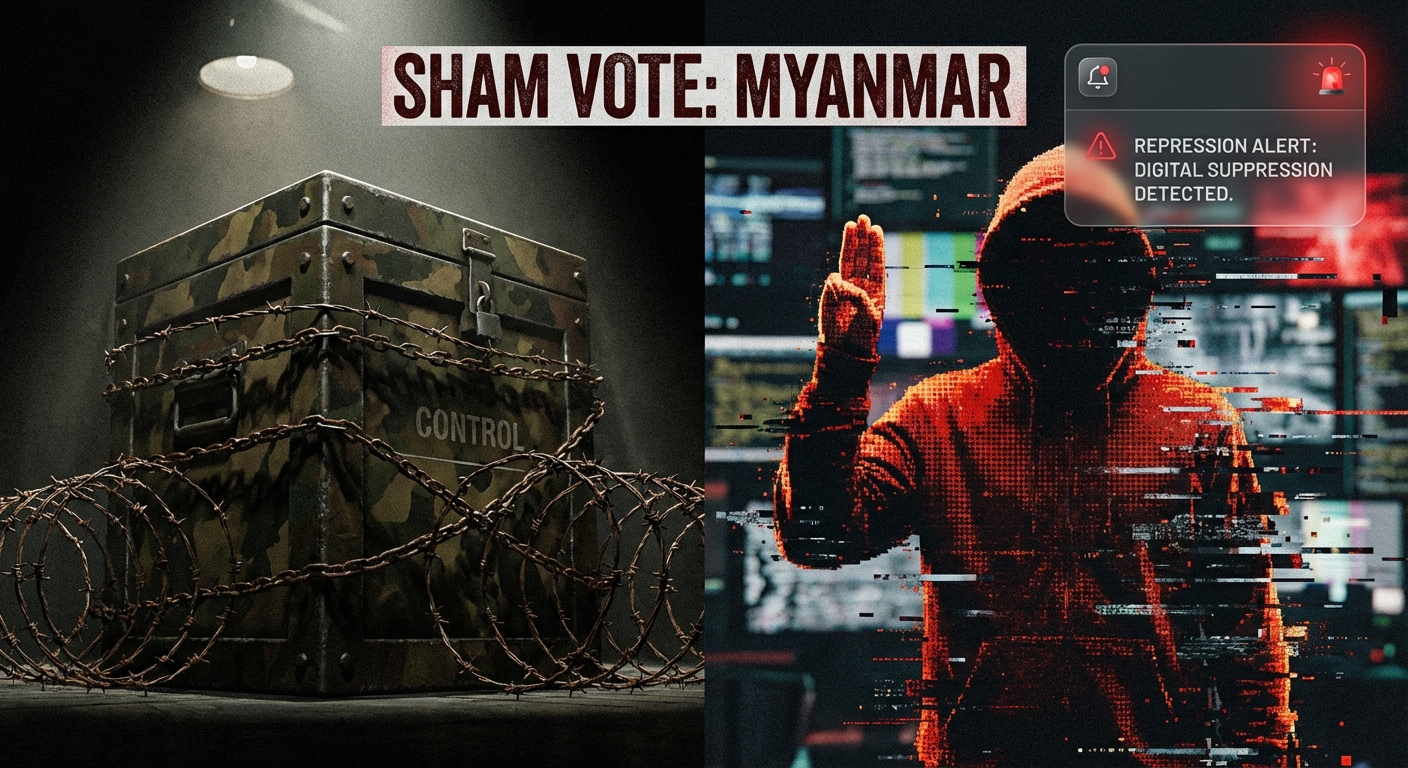
International observers, including the UN and Amnesty International, warn that the upcoming Myanmar elections are a “sham” exercise designed to legitimize military rule. The core concerns include the arbitrary detention of opposition leaders, the criminalization of free speech, intensified military airstrikes on civilian areas to suppress dissent, and the systemic exclusion of the National League for Democracy (NLD). The vote is viewed not as a democratic process, but as a tactic to consolidate the junta’s power amidst a raging civil war.
1. The Legitimacy Trap: Why the Junta Needs an Election
The central paradox of the current situation in Myanmar is why a military regime, which seized power through a coup in 2021, is so intent on holding an election. The answer lies in the search for legitimacy—not from its own people, but from international neighbors and allies.
The Strategy:
By holding a nominally “democratic” process, the junta aims to transition from a purely military administration to a civilian-fronted government. This is a classic authoritarian playbook: create a veneer of legalism to allow hesitant diplomatic partners (potentially within ASEAN or China) to normalize relations. However, as noted in recent reports from Amnesty International, this process is fundamentally flawed because the outcome is predetermined. The election is not a contest for power, but a ritual of submission.
The Credibility Gap:
For an election to be credible, it requires freedom of assembly, a free press, and the participation of opposition parties. Currently, Myanmar has none of these. The country is under a state of emergency where the constitution has been effectively suspended in favor of martial law. This mirrors broader global trends of political disruption and authoritarianism, where regimes co-opt democratic language to dismantle democratic institutions.
2. Mechanisms of Control: Laws, Arrests, and Silence
How do you hold an election when the majority of the population opposes your rule? The answer involves a sophisticated and brutal apparatus of repression. The concerns cited by international news outlets are not just about unfair voting rules; they are about the systemic eradication of dissent.
Legislative Weapons:
The junta has enacted new laws that criminalize criticism of the election process itself. According to Human Rights Watch, voicing opposition to the vote or urging a boycott can lead to long prison sentences. This creates a “silence trap” where the only permissible public speech is praise for the regime.
Targeted Detentions:
Arbitrary arrests have intensified in the lead-up to the polls. This is not random; it is a targeted decapitation of civil society. Journalists, student leaders, and former NLD members are being detained preemptively to prevent them from organizing any form of boycott or protest. The goal is to ensure that on election day, there are no alternative voices left to listen to.
3. The Human Cost: Airstrikes and Displacement
Perhaps the most alarming aspect of the election preparation is the correlation between the upcoming vote and a spike in military violence. The UN Office of the High Commissioner for Human Rights (OHCHR) has documented a disturbing rise in airstrikes against villages in contested areas.
The Logic of Violence:
These attacks serve a dual purpose: depopulation and intimidation. In regions where the resistance (the People’s Defense Forces or ethnic armed organizations) is strong, the military is using air power to displace civilians, effectively removing “unfriendly” populations from the voter rolls. Vatican News has reported on the catastrophic humanitarian situation, noting that millions have been displaced, making inclusive or fair voting logistically impossible even if the political will existed.
The Reality on the Ground:
This is not a peaceful campaign season; it is a war zone. Holding an election in this environment forces civilians into a deadly choice: participate in a sham vote and risk retaliation from resistance groups, or boycott and face arrest by the military. This dynamic creates a cycle of violence that international observers warn will only worsen post-election.
4. International Condemnation: UN, ASEAN, and Sanctions
The international community’s response has been vocal, though its effectiveness remains debated. The UK Government recently issued a statement at the UN, warning that these elections risk “provoking further violence” rather than solving the crisis. This sentiment is echoed by the United States and the European Union, who have refused to recognize the legitimacy of the process.
The Role of ASEAN:
The Association of Southeast Asian Nations (ASEAN) finds itself in a difficult position. While the bloc operates on a principle of non-interference, the scale of the humanitarian crisis has forced a reckoning. Diplomatic pressure is mounting for ASEAN to deny the junta the legitimacy it craves, though member states remain divided. For those following global geopolitical updates, the fracture within ASEAN over Myanmar is a critical story to watch, as it impacts regional stability and trade.
5. Understanding the Roots of the Conflict
To truly understand why these elections are a flashpoint, one must understand the history of Myanmar’s struggle between military dominance and democratic aspiration. The current crisis is not an anomaly; it is the latest chapter in a decades-long battle.
Recommended Reading:
For readers who want to move beyond the headlines and understand the deep historical fissures that led to this moment—from the colonial era to the rise and fall of the democratic transition—we highly recommend The Hidden History of Burma. It provides the essential context needed to grasp the complexity of the 21st-century crisis.

Frequently Asked Questions
Why are the 2025 Myanmar elections considered a sham?
They are considered a sham because the military junta has arrested the country’s popular opposition leaders (including Aung San Suu Kyi), dissolved the main opposition party (NLD), and criminalized free speech. There is no possibility for a free or fair contest under these conditions.
What is the NLD?
The NLD (National League for Democracy) is the political party that won the landslide victories in the 2015 and 2020 elections. The military coup in 2021 was launched specifically to prevent the NLD from taking office, and the party has since been dismantled by the regime.
How has the UN responded?
The UN has condemned the violence and the election plans. The Office of the High Commissioner for Human Rights (OHCHR) has issued warnings that the election could spark increased bloodshed and has called for an end to airstrikes and arbitrary detentions.
What are the risks for civilians?
Civilians face a dual threat: violence from the military if they protest or boycott the election, and potential danger from resistance groups if they are seen as collaborating with the regime’s voting process. Additionally, airstrikes in contested areas put all residents at risk of physical harm.
Is there a civil war in Myanmar?
Yes. Since the 2021 coup, a widespread armed resistance movement has emerged, involving the People’s Defense Forces (PDF) and established Ethnic Armed Organizations (EAOs). They are fighting to overthrow the military junta, and the country is effectively in a state of civil war.