Table of Contents
- What Are Renewable Energy Solutions for Net Zero?
- The Spine of Decarbonization: Clean Electricity
- Energy-as-a-Service (EaaS): Breaking Cost Barriers
- Decentralized Power: Taking Control of Your Grid
- The Invisible Solution: Smart Energy Management
- Green Hydrogen & Industrial Propulsion
- Frequently Asked Questions
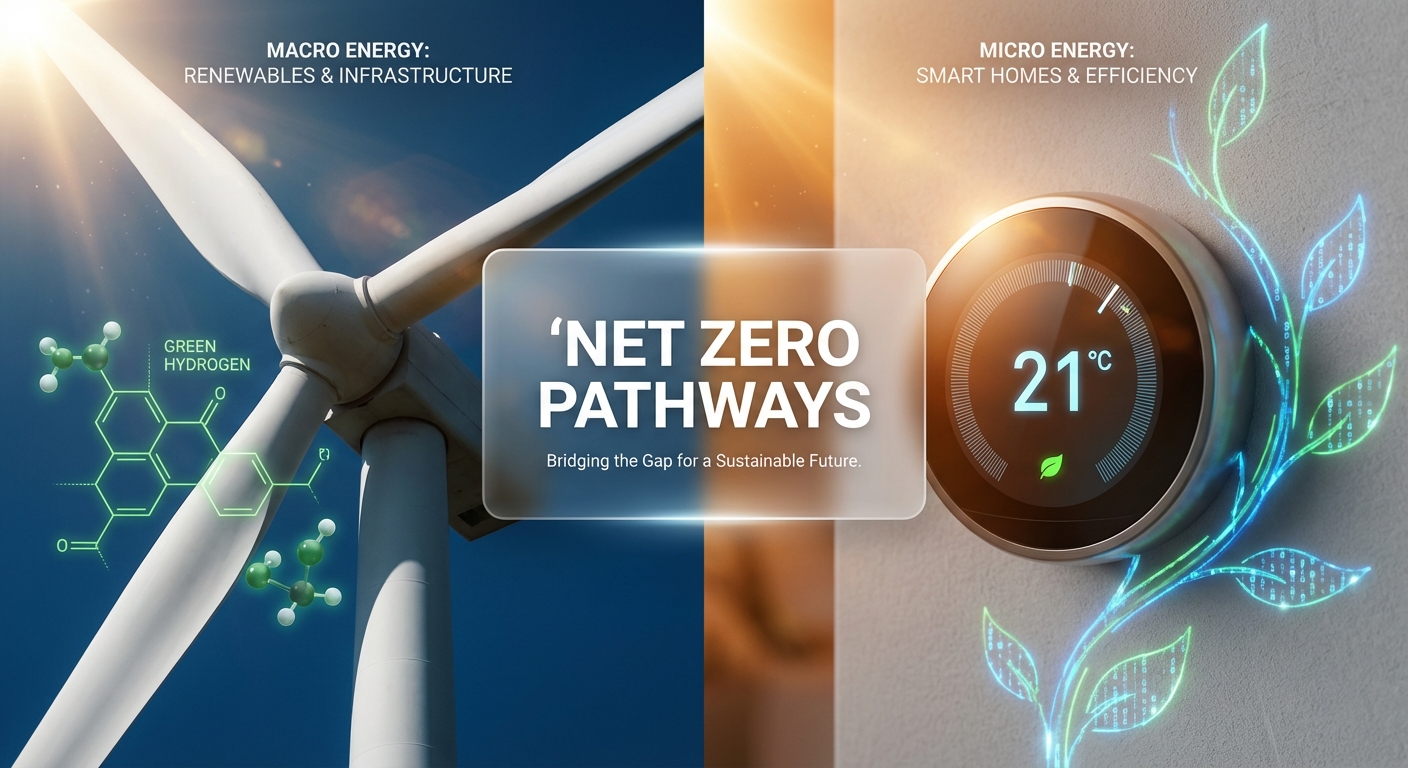
Renewable energy solutions for net zero emissions refer to an integrated suite of technologies and business models designed to eliminate carbon output. Core solutions include variable renewables (wind and solar) for clean electricity, energy storage systems to manage intermittency, and Energy-as-a-Service (EaaS) platforms to finance infrastructure. Emerging technologies like green hydrogen and clean propulsion are critical for decarbonizing hard-to-abate sectors like marine transport and heavy industry.
The Spine of Decarbonization: Clean Electricity
Achieving net zero is impossible without a massive overhaul of our electrical grids. According to the National Renewable Energy Laboratory (NREL), a net-zero power grid by 2035 is technically feasible and essential. The strategy relies heavily on increasing the generation share of wind and solar energy to between 60% and 80%. This isn’t just about building more turbines; it’s about grid modernization.
The Mechanism of Change:
The transition requires moving from centralized fossil fuel plants to a distributed network of renewable assets. Hydropower and geothermal energy act as the stable “baseload” partners to variable wind and solar. This mix ensures that when the sun isn’t shining or the wind isn’t blowing, the grid remains stable. A common misconception is that renewables are too unreliable for a base load; however, when paired with utility-scale battery storage and advanced forecasting algorithms, they can match the reliability of coal or gas.
Why It Matters:
Electrification is the primary vehicle for decarbonization. By cleaning the grid, every electric vehicle (EV) and heat pump plugged into it instantly becomes a zero-emission device. The climate benefits of this rapid deployment also extend to public health, as the reduction in particulate matter from fossil fuel combustion saves billions in healthcare costs annually.
Energy-as-a-Service (EaaS): Breaking Cost Barriers
One of the biggest hurdles to adopting renewable energy solutions is the high upfront capital cost (CapEx). This is where Energy-as-a-Service (EaaS) transforms the landscape. Instead of a factory or port authority purchasing solar panels or battery arrays outright, they partner with a provider who installs, owns, and maintains the equipment. The customer simply pays for the energy service—often at a rate lower than their previous utility bill.
How EaaS Works:
EaaS shifts energy upgrades from a capital expense to an operating expense. This model is particularly vital for marine decarbonization and industrial clusters, where the cost of retrofitting vessels with clean propulsion or installing dockside charging infrastructure is prohibitive. By removing the initial investment barrier, EaaS accelerates the adoption of energy storage and microgrids, allowing businesses to meet net-zero targets without liquidating their cash reserves.
Strategic Advantage:
Beyond financing, EaaS providers often bring advanced analytics to the table. They monitor usage patterns in real-time, optimizing when to draw power from the grid versus when to use stored battery power, further driving down costs and emissions.
Decentralized Power: Taking Control of Your Grid
While global infrastructure is crucial, net zero also requires decentralized action. Homeowners and small businesses can contribute by generating their own clean power. This reduces strain on the central grid and minimizes transmission losses. Solar technology has matured to the point where “off-grid” capability is accessible to the average consumer.
For those looking to start their journey toward energy independence, a comprehensive solar kit is the standard entry point. These systems allow you to harvest solar energy directly, store it in batteries, and use it to power essential appliances or offsets your grid consumption.
Recommended Solution: Renogy 400 Watt Solar Panel Kit
This kit is an excellent example of accessible renewable tech. It includes high-efficiency monocrystalline panels and a charge controller, making it suitable for sheds, cabins, or backup power systems. It empowers users to physically participate in the energy transition rather than just passively consuming green power.

The Invisible Solution: Smart Energy Management
You cannot manage what you do not measure. A critical, often overlooked aspect of net zero is energy efficiency. Before adding solar panels, the most cost-effective step is to reduce waste. Smart energy monitors connect to your breaker panel to provide second-by-second data on exactly which appliances are consuming power.
The Data Mechanism:
These devices use current transformers (CTs) to clamp around your mains and individual circuits. They transmit this data to a smartphone app, revealing “vampire loads”—devices that suck power even when turned off. By identifying and eliminating these inefficiencies, a household can reduce its carbon footprint by 10-20% without changing its lifestyle.
Recommended Solution: Emporia Vue 3 Gen 3 Energy Monitor
We recommend the Emporia Vue 3 for its precision and ability to monitor solar generation alongside consumption. It bridges the gap between usage and behavior, giving you the data needed to make informed decisions about your energy habits.

Green Hydrogen & Clean Propulsion
For sectors that cannot be easily electrified—such as transoceanic shipping and steel manufacturing—green hydrogen is the net-zero frontier. Unlike “grey” hydrogen produced from natural gas, green hydrogen is created by electrolyzing water using renewable electricity (wind or solar). It is a clean-burning fuel that emits only water vapor.
Application in Propulsion:
As highlighted by The Nature Conservancy, balancing conservation with infrastructure is key. Green hydrogen allows us to store vast amounts of renewable energy and transport it. In the marine sector, clean propulsion systems utilizing hydrogen fuel cells or ammonia (derived from hydrogen) are replacing heavy fuel oil, slashing the immense carbon output of global trade fleets.
Frequently Asked Questions
What is the difference between net zero and carbon neutral?
While often used interchangeably, “net zero” is a stricter standard. Carbon neutral allows for balancing emissions with offsets (like planting trees) without necessarily reducing the emissions source. Net zero requires reducing greenhouse gas emissions to the lowest possible level physically (often 90%+) and only offsetting the final, unavoidable residual emissions.
Can renewable energy really power heavy industry?
Yes, but not through direct electrification alone. Heavy industry requires high heat and dense fuels. This is where green hydrogen and industrial-scale heat pumps play a role. By using renewables to create hydrogen fuel, we can power steel and cement factories without coal.
How does Energy-as-a-Service save money?
EaaS saves money by eliminating the upfront capital expenditure (CapEx) of buying equipment. You avoid debt and interest payments on hardware. Furthermore, EaaS providers are incentivized to optimize the system for maximum efficiency, which lowers your monthly operational costs (OpEx).
Is 100% renewable energy possible by 2050?
Most major studies, including those by the IEA and NREL, indicate that 100% renewable energy is technically possible. It requires massive investment in grid transmission lines, energy storage (batteries), and diverse generation sources (wind, solar, hydro) to ensure reliability.
What is the most efficient renewable energy source?
In terms of conversion efficiency (sunlight to power), hydropower and wind are generally more efficient than solar PV. However, “efficiency” is less important than “cost-effectiveness” and “scalability.” Solar is often the cheapest and easiest to deploy, making it a leading solution despite lower raw conversion rates.