
- Direct Answer: Are We There Yet?
- 1. The Holy Grail: Why Room Temperature Matters
- 2. The Pressure Problem: Squeezing Electrons into Submission
- 3. The Graphite Anomaly: Ambient Pressure Success?
- 4. Cooper-Pair Density Modulation: A New State of Matter
- 5. The UH Protocol: Stabilizing the Impossible
- 6. Recommended Solution: Visualize the Physics at Home
- Frequently Asked Questions
What is the latest breakthrough in room-temperature superconductors?
Recent advancements in 2025 have identified charge-density waves (CDWs) and Cooper-pair density modulation as key mechanisms for achieving superconductivity at room temperature. Notably, researchers at the University of Houston have successfully used a pressure-quench protocol to stabilize high-pressure superconducting phases at ambient pressure. Simultaneously, studies on pyrolytic graphite and ternary hydrides suggest that stable, resistance-free electron flow is possible near 300K (80°F) without the need for extreme cooling.
1. The Holy Grail: Why Room Temperature Matters
For over a century, superconductivity—the flow of electricity with zero resistance—has been restricted to extreme environments. Traditional superconductors require cooling with liquid helium to temperatures near absolute zero (-459°F). This logistical nightmare has kept the technology locked in MRI machines and particle accelerators.
The Energy Revolution:
If we achieve a stable room-temperature superconductor at ambient pressure, the implications are staggering. We could transmit electricity across continents with zero loss, create levitating trains that require minimal energy, and build processors that never overheat. The recent flurry of papers in Physical Review Letters and news from the University of Houston suggests we are moving from theoretical possibility to engineering reality.
This pursuit parallels the advancements we have seen in recent graphene superconductor breakthroughs, where manipulating atomic structures allows for unprecedented electron flow.
2. The Pressure Problem: Squeezing Electrons into Submission
To understand the recent breakthroughs, you must understand the role of high pressure. Historically, to force electrons to pair up (forming Cooper pairs) at higher temperatures, scientists had to squeeze materials between diamond anvils at pressures exceeding those found at the center of the Earth.
The Mechanism:
High pressure forces atoms closer together, stiffening the crystal lattice. This allows sound waves (phonons) to bind electrons together more strongly, resisting the thermal energy that usually breaks them apart. Recent studies on ternary hydrides (like La-Sc alloys) have shown superconductivity at 298K, but only at crushing pressures of 250 GPa.
The New Insight:
According to recent physics reports, the key isn’t just the pressure itself, but how it strengthens charge-density waves (CDWs). These waves are ripples in the electron density of a material. By tuning these waves, scientists believe they can coax electrons into a superconducting state without needing the permanent vice-grip of a diamond anvil.
3. The Graphite Anomaly: Ambient Pressure Success?
One of the most exciting developments involves a material you likely have in your pencil: graphite. Specifically, Highly Oriented Pyrolytic Graphite (HOPG) with specific defect lines has shown signs of one-dimensional superconductivity at temperatures as high as 300K.
Why Pyrolytic Graphite?
This material is composed of stacked layers of carbon. When these layers are manipulated or “wrinkled” (creating defects), electrons can travel along the wrinkles with zero resistance. Unlike the hydrides mentioned above, this phenomenon has been observed at ambient pressure, making it a prime candidate for practical electronics. This aligns with broader research into carbon-based quantum materials.
4. Cooper-Pair Density Modulation: A New State of Matter
In a fascinating twist, researchers studying iron-based materials have discovered a new state of matter called Cooper-pair density modulation (PDM). Usually, superconducting electrons (Cooper pairs) are distributed evenly throughout a material. In this new state, the density of these pairs fluctuates like a wave.
The Significance:
This discovery, detailed in recent mechanics reports, was visualized using scanning tunneling microscopy. It suggests that superconductivity is more robust than previously thought. Understanding PDM allows physicists to design materials where the superconducting state is “protected” from thermal noise, bringing us closer to stable room-temperature operation. This deep dive into electron behavior is as fundamental as the work done on the Standard Model of particle physics.
5. The UH Protocol: Stabilizing the Impossible
The most practical hurdle has always been: “Great, it works at high pressure, but how do we use it?” Physicists at the University of Houston (UH) may have solved this with a pressure-quench protocol.
How It Works:
1. Squeeze: The material (BST) is compressed to high pressure to induce the superconducting phase.
2. Cool & Depressurize: The material is cooled, and the pressure is released.
3. The Result: Instead of reverting to its normal state, the material gets “stuck” in its high-pressure phase, even when brought back to ambient pressure. It creates a metastable superconductor.
This method allows us to harvest the benefits of high-pressure physics without needing to maintain the pressure, similar to how synthetic diamonds are made and then exist permanently at normal pressure.
6. Recommended Solution: Visualize the Physics at Home
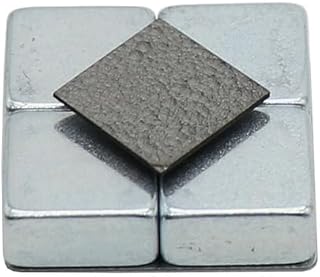
While you cannot yet buy a room-temperature superconducting computer, you can experiment with the exact material at the center of the ambient-pressure debate: Pyrolytic Graphite. This kit demonstrates diamagnetic levitation—a cousin to the Meissner effect seen in superconductors—allowing a slice of graphite to float above magnets at room temperature without any power source.
Pyrolytic Graphite Levitation Experiment
This is the closest visual representation of quantum levitation available to the public. It uses the same high-grade graphite discussed in recent ambient-pressure studies to demonstrate how materials interact with magnetic fields at the atomic level.
Frequently Asked Questions
What is the difference between high-temperature and room-temperature superconductors?
“High-temperature” in physics usually means anything above -320°F (liquid nitrogen temperatures). “Room-temperature” means roughly 300 Kelvin (80°F), where no cooling is required at all. We have achieved high-temperature, but stable room-temperature is the new frontier.
How does hydrogen help superconductivity?
Hydrogen is the lightest element, meaning its atoms can vibrate incredibly fast. These high-frequency vibrations are excellent for binding electrons together into Cooper pairs. This is why hydride-rich materials (like Hydrogen Sulfide and Lanthanum Hydride) are currently holding the records for highest transition temperatures.
What is the Meissner Effect?
The Meissner Effect is the expulsion of a magnetic field from a superconductor. When a material becomes superconducting, it creates a mirror image of the magnetic field effectively repelling it, which causes magnets to levitate above the material.
Are these breakthroughs peer-reviewed?
Yes. The recent findings regarding charge-density waves and the UH pressure-quench protocol have been published in reputable journals like Physical Review Letters and by the Simons Foundation. However, the field moves fast, and replication is always key to scientific consensus.
Will this change my computer?
Eventually, yes. Room-temperature superconductors would eliminate heat loss in CPUs. This means computers could run thousands of times faster without melting, and data centers would no longer require massive cooling systems, significantly reducing global energy consumption.