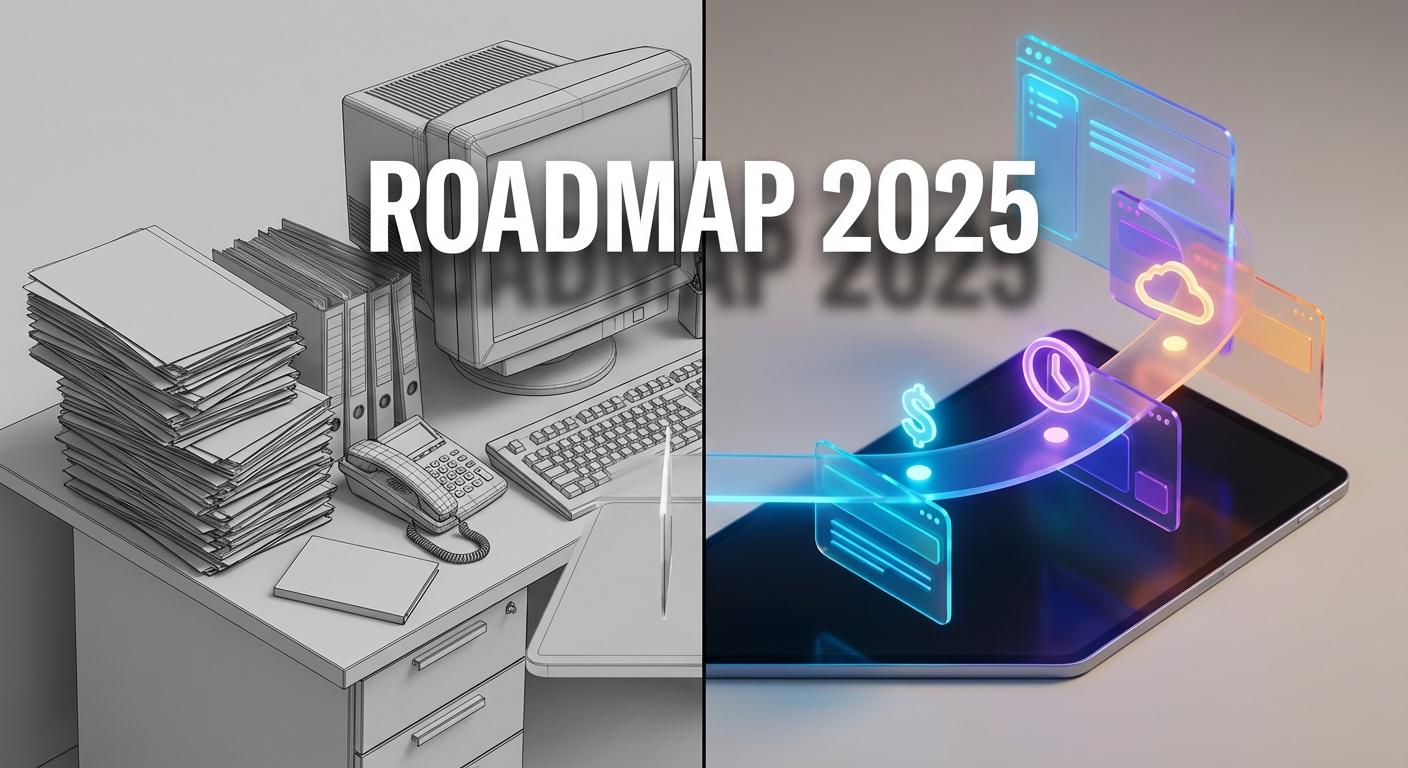
A digital transformation roadmap for small businesses typically requires a budget between $25,000 and $75,000 for initial strategy and implementation. While enterprise projects can exceed $500,000, small businesses can achieve a comprehensive overhaul in a timeline of 3 to 6 months by focusing on resource allocation, specific SMART goals, and phased technology adoption rather than custom software development.
1. The Real Cost: Budgeting for $25k vs. $500k
One of the most common misconceptions about digital transformation is that it requires an enterprise-level budget. According to recent industry analysis, the cost spectrum is vast and dependent entirely on the scope of your technology adoption.
For a small business (1-50 employees), a focused strategy usually falls into the $25,000 to $75,000 range. This typically includes:
- Discovery Phase ($5k-$10k): Auditing current systems and defining the "True North" strategy.
- Tool Implementation ($10k-$30k): First-year licensing for CRM, Cloud migration, or Automation platforms.
- Training & Change Management ($10k-$20k): Upskilling staff to actually use the new tools.
However, costs escalate quickly for larger organizations. As noted by Svitla Systems, mid-to-large scale projects often range from $500,000 to $5 million. This divergence occurs when businesses move from buying "off-the-shelf" SaaS solutions to building custom proprietary software. To keep your budget under control, prioritize process modernization over custom coding.
For a deeper dive into managing these expenses without overspending, read our guide on digital transformation strategy for small businesses on a budget.
2. The Timeline: A Realistic 3-Phase Schedule
A roadmap is nothing without a timeline. While every business is unique, a successful transformation generally follows a 3-phase structure over 3 to 6 months.
Phase 1: Assessment & Strategy (Weeks 1-4)
This is the diagnostic phase. You are not buying software yet; you are identifying bottlenecks. As suggested by McKinsey, this is where you define your "True North"—the ultimate performance goal of the transformation. Are you trying to reduce customer service wait times or automate invoicing?
Phase 2: Pilot Implementation (Weeks 5-12)
Select a single department or process to transform first. This "Agile" approach mitigates risk. If you are rolling out a new ERP system, start with just the finance team. This allows you to fix bugs before they impact the entire company.
Phase 3: Scaling & Optimization (Weeks 13-24)
Once the pilot is stable, roll it out to the rest of the organization. This phase focuses heavily on resource allocation—ensuring your team has the hardware and support they need.
For businesses specifically looking at software costs during this timeline, check our breakdown of enterprise software pricing for 2025.
3. Step-by-Step Strategic Roadmap
Creating a digital transformation roadmap requires more than just a calendar; it requires a strategic framework. Here is the mechanism for building one that actually works:
Step 1: Define SMART Goals
Vague goals like "get digital" fail. Use SMART goals (Specific, Measurable, Achievable, Relevant, Time-bound). Example: "Reduce invoice processing time by 50% within 4 months using AI automation."
Step 2: Map the Current State vs. Future State
Document your manual processes. Where is the paper? Where is the double-entry data? Your roadmap is simply the bridge between this current inefficiency and your desired future state.
Step 3: Secure Executive Buy-In
Transformation often fails due to "immune system" resistance within the company. Leadership must communicate why this change is happening. It is not just about technology; it is about survival.
Step 4: Select the Tech Stack
This is where cost optimization is critical. Don’t buy tools that overlap. Ensure your CRM talks to your Email Marketing tool.
If you are considering AI as part of your stack, be sure to review our analysis on LLM implementation costs for small business automation.
4. Resource Allocation & Critical Tools
Successful transformation requires the right educational resources to guide your leadership team. We highly recommend equipping your key decision-makers with the following playbook, which is widely regarded as the definitive text on adapting business strategy for the digital age.
Recommended Solution:

This book is essential because it moves beyond the "hype" of technology and focuses on the strategic restructuring required to leverage it. It is particularly useful for small business owners trying to compete with digital giants.
5. Common Pitfalls to Avoid
Even with a roadmap, businesses trip up. The most common pitfall is ignoring culture. You can buy the best software in the world, but if your employees refuse to use it, you have wasted your money.
Another major error is scope creep. Projects that lack a defined endpoint tend to expand indefinitely, draining the budget. Stick to your initial SMART goals and resist the urge to add "nice-to-have" features mid-project.
Frequently Asked Questions
What is the main driver of digital transformation cost?
The main drivers are the complexity of the software (custom vs. off-the-shelf) and the depth of data migration required. Moving decades of messy data into a new system is labor-intensive and expensive.
How can small businesses reduce transformation costs?
Focus on "Low-Code" or "No-Code" platforms that allow you to build workflows without hiring expensive developers. Also, prioritize SaaS subscriptions (OpEx) over buying heavy server infrastructure (CapEx).
Do I need a consultant for a digital roadmap?
For a budget under $50k, you likely do not need a full-time consultant. You can use free frameworks and guides (like this one) to build your initial strategy, perhaps hiring a specialist only for the technical implementation.
How do I measure the ROI of digital transformation?
Measure ROI by tracking specific KPIs defined in your strategy phase, such as "Customer Acquisition Cost," "Time to Market," or "Employee Productivity Rates." If these metrics improve, the project is paying for itself.
What comes first: strategy or technology?
Strategy always comes first. Technology is just the tool to execute the strategy. Buying technology without a strategy is like buying a power drill without having a blueprint for the house.